
On August 17, the “Delta-Lotsman” branch of the state-owned enterprise “Ukrainian Sea Ports Authority” canceled a tender for voluntary health insurance services.
According to the Prozorro electronic government procurement system, the reason for this decision was that there was no longer a need to procure goods, works, or services.
As previously reported, the tender was announced on June 25, with an estimated value of 8.360 million UAH.
The following companies participated in the tender: Guardian Insurance Company with a bid of 4.275 million UAH, TAS Insurance Group with a bid of 7.363 million UAH, and Ultra Alliance with a bid of 8.251 million UAH.
State Enterprise “Delta-Lotzman” was established by order of the Ministry of Transport of Ukraine in 1998 with the aim of improving conditions for ensuring maritime safety, protecting human life at sea and the environment in Ukraine’s territorial waters in accordance with the requirements of international agreements and conventions.

The Ukrainian infrastructure company Autostrada has sponsored the audiovisual art installation “The Future Remembers,” dedicated to the 35th anniversary of Ukraine’s independence.
As the company announced on August 21, the installation was realized on the “Motherland” monument in Kyiv. Through large-scale light projections, the monument is transformed into a dynamic canvas that, through images of historical memory and the experiences of different generations, illustrates the connection between Ukraine’s past, present, and future.
Autostrada noted that its support for the project is rooted in the values of sustainability, unity, and the preservation of historical and cultural heritage.
“We know very well that any complex engineering structure requires a solid foundation. For a nation, that foundation is its historical and cultural heritage. It is culture that preserves memory, maintains the connection between generations, and shapes shared meanings,” the company stated.
The “The Future Remembers” art installation will be on display daily from 9:00 p.m. to 11:00 p.m. until September 1.
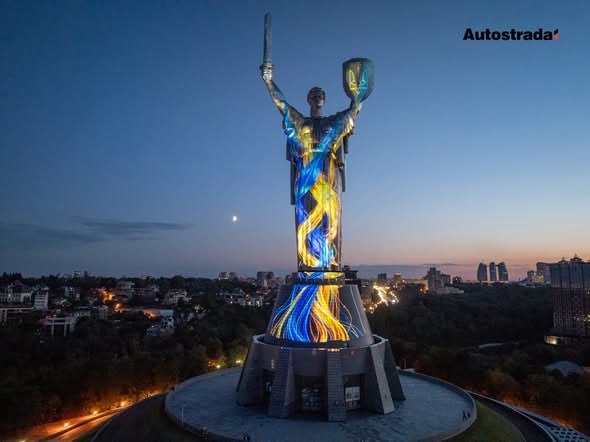
The “Motherland” monument, on which the light installation is displayed, is one of Kyiv’s most recognizable landmarks and part of the National Museum of the History of Ukraine in World War II.
Autostrada is a Ukrainian group of companies specializing in infrastructure construction. Its main areas of activity include road, bridge, industrial, and underground construction, as well as design. According to the company, its team consists of over 8,000 employees, its fleet includes more than 5,000 pieces of equipment, and its own production base comprises over 60 enterprises and manufacturing facilities.
Amid the full-scale war, Autostrada is participating in the restoration of transportation infrastructure and engineering structures. According to the company, during this period, more than 3,000 km of roads and over 200 bridges have been repaired, and approximately 50 infrastructure facilities have been restored. Among the company’s current major projects are the construction of the metro line to Vynohradyr in Kyiv and work on the Podil-Voskresensky Bridge.
Autostrada was founded by businessman Maksym Shkil. The company is part of the MS Capital holding company he established.
Autostrada, CULTURE, KYIV, philanthropy, Ukrainian independence

European countries are systematically phasing out citizenship-by-investment programs and tightening the conditions for wealthy foreigners to obtain residency, according to the Experts Club information and analytical center.
One of the key decisions for the market was the ruling by the Court of Justice of the European Union, which in April 2025 found the Maltese investment citizenship program to be in violation of EU law. Cyprus and Bulgaria had previously abandoned similar schemes.
As of April 3, 2025, Spain shut down its Golden Visa program, which allowed individuals to obtain a residence permit by purchasing real estate worth at least EUR500,000. Portugal removed real estate from the list of eligible investments back in 2023, refocusing the program on funds, scientific research, cultural heritage, and the creation of companies and jobs.
Greece has retained its Golden Visa program but raised the minimum investment threshold for real estate to EUR 800,000 in the most popular regions and to EUR 400,000 in other parts of the country. The EUR 250,000 threshold remains only for select renovation and redevelopment projects. In January 2026, the number of applications for the Greek Golden Visa fell by 63.5% compared to January of the previous year.
Maksym Urakin, founder of Experts Club, believes that investment migration has evolved from a financial product into a matter of security and trust.
“The strategy of ‘buy a property and get status’ is gradually becoming a thing of the past. Capital transparency, reputation, tax history, and real economic contribution are coming to the forefront,” Urakin noted.
European countries are expected to continue reducing the role of real estate in immigration programs, giving preference to investments in funds, technology, infrastructure, and job creation.
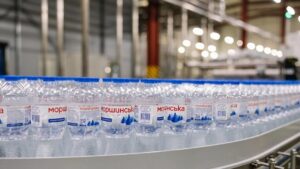
The National Agency for Asset Tracing and Management (ARMA) received five bids by the deadline for the competition to select a manager for IDS Ukraine—the producer of “Morshynska” and “Mirgorodska,” which is linked to Russian oligarch Mikhail Fridman.
“The competitive selection process has reached its final stage. Next up is the evaluation of the submitted proposals and the selection of the most professional and capable administrator,” the agency reported on Facebook on Saturday.
IDS Ukraine’s assets were transferred to ARMA’s management pursuant to a court ruling. This involves an integrated production complex with a full cycle of operations: from mineral water extraction to production and distribution of products, including abroad. In late 2024, the Ministry of Justice filed a petition with the High Anti-Corruption Court (VAKS) to transfer the corporate rights of all seven companies in the group to the state, but the case is still pending in court.
In March 2023, an administrator—LLC “Carpathian Mineral Waters”—was selected for two companies in the group—PJSC “Morshyn Mineral Water Plant ‘Oscar’” and PJSC “IDS” (IDS Ukraine)— but the agreement was not approved by the Antimonopoly Committee, and in 2025 it was terminated as unfulfilled.
In the fall of 2025, then-Prime Minister Yulia Svyrydenko announced that ARMA had launched a procedure to transfer the entire IDS asset complex to management through a public auction. On June 22, 2026, it was reported that ARMA would make another attempt to select a manager.
IDS Ukraine opposes holding the tender. Among its arguments is that more than 50% of the company’s shares are owned by verified international investors: the Patarkatsishvili family (34.83%), the Georgian government (7.73%), and minority shareholders (7.45%). It was also noted that ARMA does not have the proper authority to hold the competition and has not identified the assets as required by law.
In addition, IDS Ukraine stated that all shareholders—not just sanctioned individuals with Russian citizenship—have been completely removed from management and do not have access to the company’s revenues.
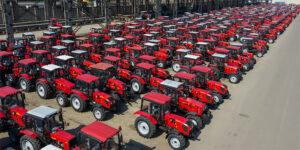
In January–July 2026, Ukraine exported tractors worth $5.97 million, which is approximately 71% more than during the same period last year, when exports totaled $3.49 million, according to data from the State Customs Service.
Thus, tractor exports are growing significantly faster than imports, although in absolute terms, the volume of Ukrainian exports remains relatively small.
Belgium became the main market for Ukrainian tractors in January–July, accounting for 24.8% of total exports. Based on the total volume of shipments, the value of exports to this country amounted to approximately $1.48 million.
Over the course of the year, the geography of exports changed noticeably. In January–July 2025, Romania was the largest destination, accounting for 38% of Ukrainian tractor exports.
For the full year 2025, Ukraine exported $6.6 million worth of tractors, compared to $5.4 million in 2024. The main export destinations at that time were Romania, Belgium, and Germany.
It is noteworthy that in just the first seven months of 2026, exports nearly matched the total for the entire previous year: $5.97 million compared to $6.6 million for the full year of 2025.
If the current trend continues, the final figure for 2026 could exceed last year’s level; however, the data provided by the State Customs Service does not allow for a prediction of future monthly trends or the year-end total.
At the same time, Ukraine remains a major net importer of tractors. From January through July, imports totaled $507.5 million, which is approximately 85 times the value of exports.
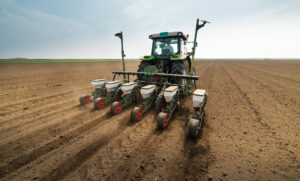
In January–July 2026, Ukraine imported $507.5 million worth of tractors, which is 2% more than during the same period last year, when imports totaled $497.8 million, according to data from the State Customs Service.
However, in July alone, tractor imports fell by 5% compared to July 2025 and by 3% compared to June of this year, to $70.6 million.
Germany was the largest supplier of tractors to Ukraine over the seven-month period, accounting for 19.4% of imports, or $98.3 million.
China supplied nearly the same volume—$98 million, or 19.3% of total imports. The United States ranked third with shipments worth $89.6 million, accounting for nearly 17.7%.
Thus, the three largest countries accounted for about 56.4% of all tractor imports into Ukraine during January–July.
Compared to last year, the supplier structure has changed. In January–July 2025, the United States was the largest supplier with $94.1 million in shipments, followed by China with $87.3 million and Germany with $83.9 million.
Over the year, shipments from Germany increased by approximately 17%, and those from China by more than 12%, while imports from the United States decreased by about 5%.
For the full year of 2025, Ukraine imported tractors worth $845.7 million, which was 7.9% higher than in 2024. The main suppliers at that time were also the United States ($179.7 million), Germany ($145 million), and China ($142.8 million).
Thus, in 2026, the growth in tractor imports continued, but its pace slowed noticeably: over the first seven months, the figure increased by only 2%, and by July, a negative year-over-year trend had already been recorded.



