

JSC Ukrzaliznytsia held limited negotiations from April 1 to 8 with members of the ad hoc group (AHG) of holders of its Eurobonds with a face value of $1.055 billion, during which it presented its proposal for their restructuring, but so far without success.
“…the bondholders noted that, although they support a consensual restructuring of the bonds, they do not wish to participate in Ukrzaliznytsia’s proposal and have not submitted a counterproposal at this stage,” the company said in a statement on Friday.
It is noted that the group of bondholders decided not to seek an extension of the limited negotiations after the expiration of the specified period.
“Although Ukrzaliznytsia and the holders of restricted-rights bonds did not reach an agreement on the terms of the bond restructuring during the limited period, Ukrzaliznytsia intends to continue good-faith cooperation with AHG, in particular through the parties’ respective advisors, with the aim of reaching an agreement,” the statement noted.
According to the statement, Ukrzaliznytsia was joined by its legal advisors Clifford Chance LLP and Sayenko Kharenko, as well as its financial advisors Rothschild & Cie and FinPoint LLC, while the holders of restricted-rights bonds were joined by AHG’s legal advisors Hogan Lovells International LLP.
As stated in the restructuring presentation, Ukrzaliznytsia proposed writing off 20% of the principal amount, deferring the final repayment of the Eurobonds until June 2033, and beginning their soft amortization starting in December 2030—in six equal installments of $150 million.
At the same time, the company additionally wants to link the amount of these payments to the volume of freight traffic. “Each individual payment of $150 million may be adjusted upward or downward within the range of $112–168 million depending on the volume of freight traffic,” the presentation notes.
As for interest, in the first year (from June 2026 to June 2027), it was proposed to pay only 1.5% in cash; in the second year, 2%; in the third, 4%; in the fourth, 6%; and in the last three years, 7.75% each.
As for overdue interest, which will amount to $83 million as of June 30 of this year, Ukrzaliznytsia would also like to write off 20% of this amount, and of the remaining $67 million, pay 20% in cash—or 1.3 cents per dollar of face value—and capitalize the rest into a new instrument.
If this proposal is accepted, the company would pay only $20 million and $16 million in cash on the Eurobonds this year and next year, respectively, while in 2028 – $77 million, in 2029 – $121 million, in 2030 – $240 million, $389 million in 2031, $434 million in 2032, and $155 million in 2033.
As reported, in January 2025, Ukrzaliznytsia capitalized the coupon payments on the 2026 Eurobonds with a rate of 8.25% totaling $108.28 million, and on the 2028 Eurobonds with a 7.875% coupon rate totaling $51.9 million. This increased the outstanding amounts of these issues to $703.2 million and $351.9 million, respectively.
In January of this year, the company defaulted on $45 million in coupon payments on the 2026 and 2028 Eurobonds, due on January 9 and 15, respectively, and announced its intention to initiate a comprehensive restructuring of its financial obligations under the credit agreements related to the bonds, with the participation of qualified financial and legal advisors.
The company cited the prolonged decline in freight revenue amid a decrease in freight volumes—which is expected to reach approximately 17% in 2025— as well as an increase in attacks on the railway, the total number of which in 2025 (1,195) exceeded the combined figure for 2023–2024.
In February, the international rating agency Fitch Ratings downgraded the long-term issuer default rating (IDR) of JSC Ukrzaliznytsia to “RD” (Restricted Default) from “C,” and downgraded the long-term ratings of its Eurobonds maturing in 2026 and 2028 to “D” from “C.”
According to the presentation, in 2025, Ukrzaliznytsia saw its revenue decline by 15.6% to $2.189 billion and its EBITDA by 30.2% to $293 million, of which $270 million consisted of budgetary support. The net debt-to-EBITDA ratio rose to 5.2.
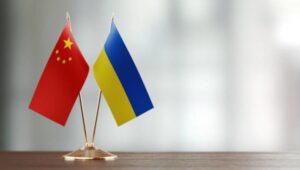
The results of a public opinion poll conducted in March 2026 by the research company Active Group in collaboration with the Experts Club information and analysis centre reveal a complex and contradictory pattern in Ukrainians’ attitudes towards China. Overall, 20.3% of respondents expressed a positive attitude, whilst 42.0% expressed a negative one. Compared to August 2025, positive assessments have risen (from 12.0%), but negative ones have also increased slightly (from 40.7%), indicating not a shift in the balance but a deepening of polarisation.
A more detailed breakdown of the responses shows that only 7.7% of those surveyed have a ‘completely positive’ attitude towards China, whilst 12.6% have a ‘mostly positive’ one. At the same time, the proportion of neutral assessments is significant — 34.3% — indicating a lack of a clear position among a significant proportion of respondents.
The negative segment is dominant and is predominantly moderate in nature: 33.1% chose the ‘mostly negative’ option, with a further 8.9% selecting ‘entirely negative’. This suggests that negative perceptions of China are not sharply radicalised, but remain persistent and widespread. The proportion of those who are undecided stands at 3.5%.

Comparative trends indicate a certain increase in interest in or reassessment of China, reflected in a rise in positive assessments. However, the parallel rise in negative sentiment suggests the absence of a single trend. Rather, it indicates the formation of more pronounced positions — both positive and critical.
“Ukrainians today quite clearly distinguish between a country’s economic weight and its perception in a political and social context. In the case of China, this is particularly evident: on the one hand, there is an awareness of its role in the global economy, and on the other, a reserved or negative attitude. This is precisely why we are seeing a simultaneous rise in both positive and negative assessments,” noted Oleksandr Pozniy, director of the research company Active Group.
The high proportion of neutral responses is also an important indicator. It may indicate a limited level of personal experience of interaction or a lack of awareness among some respondents. In such conditions, public opinion remains sensitive to changes in the information environment and the foreign policy context.
“The modern international economy is shaped not only by trade, but also by trust and the perception of partners. If a country is present in the market but is not associated with investment, technology or support, this affects its image in society. In the case of China, we see a clear example of such an asymmetry between economic presence and perception. Our people are guided by emotions and the picture presented by the media, rather than by concrete facts and statistics. It should be added that if Ukrainian citizens really did have such a negative attitude towards China, there would be a de facto self-imposed embargo on the purchase of Chinese technology, clothing and other goods, but this is not the case; China remains the number one trading partner, which would be difficult without a positive or neutral attitude towards the country. “Another issue is that China should also strengthen its presence in Ukraine in the fields of humanitarian aid, educational and scientific exchange, cultural diplomacy, and so on,” noted Maksym Urakin, founder of the Experts Club information and analytical centre.
Overall, the survey results indicate that China remains an important but ambiguous partner for Ukrainians. Positive assessments are on the rise, but they do not alter the overall balance, which is dominated by a cautiously negative perception. This points to the need for a deeper analysis of the factors shaping public opinion, as well as the potential for its further transformation depending on the development of economic and political relations.
According to a study conducted by the Experts Club information and analytical centre based on data from the State Customs Service, China is the leader in terms of total trade in goods with Ukraine, with a figure exceeding $21 billion. At the same time, imports from China significantly exceed exports of Ukrainian goods, resulting in a substantial trade deficit.
The study was presented at the Interfax-Ukraine press centre; the video can be viewed on the agency’s YouTube channel. The full version of the study can be found via this link on the Experts Club analytical centre’s website.
ACTIVE GROUP, CHINA, EXPERTS CLUB, Pozniy, SOCIOLOGY, SURVEYS, UKRAINE, URAKIN
On April 7, PJSC National Energy Company (NEC) Ukrenergo announced its intention to conclude contracts with Ultra Alliance Insurance Company for property insurance of Lviv Insulator Company LLC (Lot 1) and third-party liability insurance (Lot 2).
According to the Prozorro electronic public procurement system, the estimated cost of services in Lot 1 was UAH 514,200, while the company’s bid was UAH 366,400. Also participating in this lot were Transmagistral Insurance Company—430,100 UAH—and VUSO Insurance Company—513,600 UAH.
The bid for Lot 2 was 321,400 UAH; the bids from IC “Ultra Alliance” were 147,800 UAH, IC “Transmagistral” – 245,100 UAH, and IC “VUSO” – 319,300 UAH.
INSURANCE, Lviv Insulator Company, UKRENERGO, Ultra Alliance

On April 9, the Security Police Department in Chernivtsi Oblast announced its intention to enter into a voluntary insurance contract with Guardian Insurance Company (Kyiv) to cover financial risks associated with security contracts.
According to a notice in the Prozorro electronic public procurement system, the price proposal from the sole bidder—Guardian Insurance Company—was 600,000 UAH, compared to the expected cost of 630,000 UAH.
Guardian Insurance Company is a member of the Presidium of the League of Insurance Organizations of Ukraine. Since January 2020, it has held full membership status in the Motor Transport Insurance Bureau of Ukraine (MTIBU) and is authorized to issue “Green Card” policies.
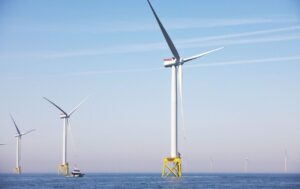
The Ukrainian industrial company Interpipe has joined another project in the renewable energy sector, supplying pipes for an offshore wind farm in the North Sea off the coast of the United Kingdom.
According to the company, construction of the plant, located 69 km off the coast of Suffolk, England, is in its final stage—the installation of turbines.
As specified, Interpipe’s pipes were previously used in the construction of the foundations for the future wind turbines. The company’s products serve as a mooring system near the wind turbine foundations, where service personnel boats can dock. In total, nearly 2,500 tons of pipes of various sizes were manufactured and shipped for this project.
“The distinctive feature of the pipes for this order lies in their wall thickness and the need to adhere to geometric parameters, as well as in the requirements for the metal’s corrosion resistance in a marine environment. It is very important for us to meet the expectations of our customers and end-users,” explained Jorge Ruiz, sales manager for pipes in European markets.
The project is scheduled to launch in late 2026 – early 2027. The plant will generate at least 1.4 GWh of electricity and will be able to supply over 1.3 million households.
Interpipe is a Ukrainian industrial company and a manufacturer of steel pipes and railway products. The company’s products are supplied to 70 countries worldwide through a network of sales offices located in key markets in the Middle East, North America, and Europe. In 2025, the company contributed 5.556 billion UAH to budgets at all levels.

In March 2026, Ukraine exported 12,430 metric tons of dairy products worth $35.38 million, which is 25.1% more in volume than in February and 44% more in revenue, according to the Association of Milk Producers (AMP), citing data from the State Statistics Service.
As noted by the industry association, exports by volume increased by only 1% compared to March 2025, while revenue decreased by 7%.
In total, in the first quarter of 2026, the country exported 30,560 tons of dairy products (-2%) worth $81.46 million (-9%) to foreign markets. In March, the key products were condensed milk and cream (25% of exports), cheese (17%), butter (15%), and casein (15%).
ABM analysts attribute the increase in shipments in March to the war in the Middle East and the logistical collapse in Iran, which had been a major competitor to Ukraine in the markets of Iraq, the Persian Gulf countries, and Central Asia. Due to disruptions in Iranian exports, buyers began returning to Ukrainian suppliers, whose product prices are currently nearly identical.
In March 2026, compared to February, Ukraine increased exports of condensed milk to 3,600 tons (+20%), whey to 1,710 tons (+24%), cheese to 1,320 tons (+14%), and ice cream to 1,370 tons (+96%). However, shipments of non-condensed milk fell to 2,010 tons (-10%). Revenue from condensed milk rose to $8.92 million, and from cheese to $6.15 million.
“Increased supply of raw materials and weak domestic demand are forcing processors to expand more actively into foreign markets. Despite quotas, the EU’s share of export revenue reached 36%. In particular, Germany has become a strategic market for casein and fresh cheeses under private label, while Poland, in addition to importing into Ukraine, is actively purchasing our butter and dry whey,” the association noted.
Against the backdrop of rising exports, imports are intensifying pressure on the domestic market. In January–March, Ukraine imported 16,950 tons of dairy products (+10%) worth $83.18 million, with cheese accounting for 63%. Experts warned that the surplus of European cheeses being redirected from China poses a threat to domestic cheese producers and could lead to a drop in milk purchase prices in Ukraine.
The foreign trade balance in the first quarter of 2026 remained negative at -$1.72 million.
To stabilize the situation, the industry association is insisting on the introduction of state protective measures against uncontrolled imports from the EU.



