
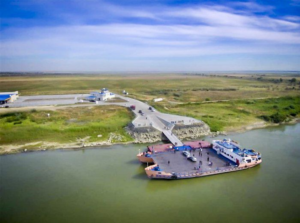
The geography of diesel fuel imports into Ukraine changed significantly in July 2026: despite record supplies from Romania, imports from Greece, Türkiye and Israel declined sharply, while the main burden is increasingly shifting to the western border.
According to the A-95 Consulting Group, Ukraine imported a total of 562,000 tonnes of diesel fuel in July, 5% more than in the same period last year.
On the southern route, Romania was the only major source to increase supplies significantly.
Imports of Romanian diesel fuel rose by 25%, from 143,400 tonnes in July 2025 to 179,300 tonnes in July this year. This was the highest figure since the beginning of 2025.
A completely different trend was observed among other suppliers along the southern and Mediterranean routes.
Imports from Greece decreased by 45%, from 60,700 tonnes to 33,100 tonnes. According to the A-95 infographic, supplies from Türkiye fell from approximately 31,000 tonnes to several thousand tonnes, while imports from Israel declined to isolated shipments.
At the same time, supplies through Poland and Lithuania increased sharply.
Poland increased its diesel fuel exports to Ukraine by 26%, to 202,800 tonnes, while Lithuania increased them by as much as 65%, to 84,300 tonnes.
According to A-95 Director Serhii Kuiun, one of the main reasons for the redistribution of supply flows was the record shallowing of the Danube, which created additional logistical difficulties, as well as continuing security risks.
As a result, Poland became the largest diesel fuel supply channel for Ukraine, while Poland, Romania and Lithuania jointly accounted for 83% of all imports in July.
The changes demonstrate how quickly the Ukrainian market is being forced to restructure its supply routes depending on the state of river logistics, security in the Black Sea region and the availability of European petroleum products.
At the same time, even the increase in total imports did not allow Ukraine to completely avoid a fuel shortage in July. A-95 attributes this to a combination of increased demand, a price-driven buying rush and higher diesel consumption by the transport sector.
Analysts expect supply to increase and the market to stabilise in August.
Source: A-95 Consulting Group, Experts Club
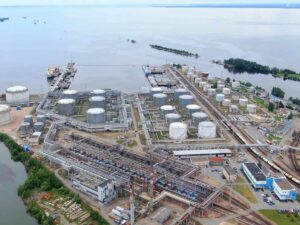
According to “Serbian Economist,” the Romanian company JT Grup Oil has received approval to build a new oil products terminal on the Danube near the port of Tisovica-Dubova, not far from Orșova in Mehedinți County, the company reported in a filing published on the Bucharest Stock Exchange.
The project involves the construction of four above-ground storage tanks for liquid fuel, as well as the engineering and logistics infrastructure necessary for the receipt, storage, and transshipment of petroleum products.
JT Grup Oil views the new facility as part of a larger regional logistics system. The Danube terminal is planned to be integrated with the company’s new terminal in the port of Constanța on the Black Sea.
According to the company, the platform being developed is intended to serve the markets of Romania, Hungary, Serbia, Austria, and Ukraine, leveraging both Black Sea logistics capabilities and the international transport corridor along the Danube.
Thus, fuel will be able to arrive via Constanta by sea and then be distributed throughout Central and Southeastern Europe using river, rail, and road transport.
For Serbia, the new facility is of particular interest due to its location on the Danube, relatively close to the Serbian border. Additional storage and transshipment capacity for petroleum products could expand fuel supply options to the Serbian market and enhance the Danube’s role in regional energy logistics.
For Ukraine, the project also creates an additional route for importing petroleum products via Romania. Since 2022, Romanian ports—primarily Constanța—have significantly increased their importance for Ukrainian trade and fuel supplies.
At the same time, JT Grup Oil is completing another major infrastructure project—the JT Terminal in the port of Constanța.
The terminal has already passed technical trials, and its commercial operation is scheduled to begin in October 2026, following the completion of all necessary procedures and the receipt of permits.
JT Grup Oil’s strategy effectively involves creating a Constanta–Danube–Central Europe logistics corridor.
The Black Sea terminal is intended to handle imported petroleum products arriving by sea, while the new facility near Orșova will bring fuel supplies closer to the markets of Serbia, Hungary, and Austria and utilize the Danube for further transportation.
“By developing the terminal in Constanta and the terminal in the Orsova area, the company aims to create an integrated logistics platform capable of effectively serving the markets of Central and Eastern Europe,” according to a statement from JT Grup Oil cited by Romanian media.
The project takes on added significance against the backdrop of the restructuring of European petroleum product supply routes and the region’s countries’ efforts to diversify their transportation infrastructure.
JT Grup Oil operates in the Romanian wholesale fuel trade and distribution market. The company’s shares are traded on the AeRO market of the Bucharest Stock Exchange under the ticker symbol JTG.
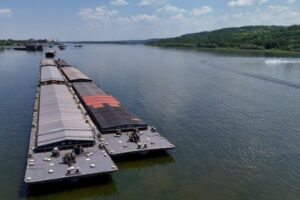
Romanian authorities plan to conduct a controlled sinking of four barges loaded with rocks in the Bala branch of the Danube to redirect more water to the Cernavodă Nuclear Power Plant and prevent the shutdown of its only operating reactor unit.
The operation is scheduled to begin on August 5 after 2:00 p.m. The barges are intended to form a temporary underwater dam and divert part of the flow from the Bala branch to the Old Danube, from where water enters the nuclear power plant’s cooling system. Authorities expect to raise the water level near the plant by 10–12 cm.
Currently, only Power Unit No. 2 is operating at “Cernavodă.” The first of the two reactors was shut down last week due to critically low water levels in the Danube. Under normal conditions, the plant’s two units account for about one-fifth of Romania’s electricity production.
Before flooding the barges, the Romanian military carried out a controlled demolition of part of the Pirjoaia underwater rock formation, which had been hindering the redistribution of the river’s flow. Following this intervention, the drop in water levels near the plant temporarily ceased. Previously, the Danube’s water level in this area had been falling by approximately 2–3 cm per day.
As of the morning of August 5, the water flow at the Danube’s entry into Romania was approximately 1,450 cubic meters per second. By August 7, this figure could drop to 1,400 cubic meters per second—nearly one-third of the long-term average for August, which stands at 3,900 cubic meters.
As early as August 1, representatives of the National Administration “Waters of Romania” warned that without emergency measures, the second power unit would be able to operate at its maximum capacity for only four to five days. If the water level drops below operational thresholds, the reactor will be shut down in a controlled manner in accordance with safety procedures.
At the same time, dredging operations are continuing in the Old Danube–Bala Branch section. Specialists must remove some of the debris left over from the explosion and secure the submerged barges, as the current could displace them and reduce the effectiveness of the temporary dam.
Romania has declared a state of energy readiness for August. Due to reduced output at nuclear power plants and other power stations, the country has increased electricity imports and called on businesses, government agencies, and the public to reduce consumption during peak-load hours.
The critically low water level of the Danube is causing problems not only for Romania. The Paks Nuclear Power Plant in Hungary has also sharply reduced production: three of the four turbines were shut down, and the remaining one was operating at only a fraction of its capacity.

At the end of July, Ukraine’s Danube port cluster sharply increased its intake of grain carriers amid a slowdown in operations at the Greater Odessa ports; however, a critical drop in water levels on the Danube could limit the capacity of this alternative export route.
According to the brokerage firm Spike Brokers, the number of grain railcars heading to the Danube ports increased nearly sevenfold over the week—from 167 to 1,141 thousand railcars. The average daily unloading rate rose by 17 railcars to 51 railcars per day.
At the same time, the number of grain railcars heading toward the ports of Greater Odessa fell by approximately 70%—to a record low of 1,356 railcars, compared to 4,525 railcars a week earlier. Average daily unloading decreased by 160 railcars to 690, while loading decreased by 203 railcars to 580 railcars per day.
In July, 1.38 million metric tons of grain were transported by rail to Ukrainian seaports, which is 37% less than in June. Additional constraints included overcrowding at certain port terminals and delays in transshipping grain from railcars to ships.
Thus, the increase in railcar deliveries to the Danube currently appears to be an immediate market response to the slowdown in operations in the Greater Odessa area. However, the capacity of the Danube route is also under pressure due to the rapid shallowing of the river.
At the end of July, the water flow in the Danube at the entrance to Romania dropped to 1,650 cubic meters per second, compared to an average July level of about 4,750 cubic meters. By August 4, according to forecasts, the figure could drop to 1,500 cubic meters per second, approaching the historic low of 1,400 cubic meters set in 1985.
Back in July, the Romanian Lower Danube Administration recorded a sharp drop in water levels across virtually the entire navigable stretch from Băziaș to Sulina. Near Corabia, several barges ran aground, and actual depths in certain critical sections decreased to 1.5–1.7 meters. Dredging operations are being carried out to maintain depths of at least 1.8–2 meters.
The main risk for Ukraine lies not necessarily in a complete shutdown of the Danube ports, but in a reduction in the permissible draft of vessels. Barges and river-sea hybrid vessels will be forced to carry less grain, which will increase the number of voyages, transportation costs, and fleet turnaround time.
Even if the terminals in Reni and Izmail retain the capacity to receive railcars, the slowdown in loading grain onto vessels could lead to a buildup of rolling stock at stations near the ports. The disparity is already evident: 1,141 railcars are heading toward the Danube ports, while the average daily unloading rate is only 51 railcars.
If this ratio persists, the terminals may once again face overcrowding, after which Ukrzaliznytsia will have to impose restrictions on the shipment of certain cargoes or implement temporary measures.
The second risk is related to the increase in queues on the Romanian sections of the Danube and the Sulina Canal. The ports of Reni and Izmail depend not only on the water depths directly at the Ukrainian berths but also on the condition of the entire Lower Danube route. As the Danube Commission notes, a single shallow section can become a “weak link” and restrict traffic along the entire international corridor.
Silting also complicates the transport of Ukrainian grain by barge to Constanta, Romania. A reduction in the load capacity of a single barge means that more vessels must be deployed to transport the same volume of cargo. This increases freight rates, transshipment costs, and the risk of fines for vessel downtime.
The third risk is the simultaneous decline in the reliability of the two main maritime routes. The ports of Greater Odessa are currently operating more slowly due to terminal congestion and delays in loading ships, while the Danube—which is supposed to serve as a backup route—faces a natural limitation on its throughput capacity.
This factor becomes particularly critical during the arrival of the new grain harvest. Rising logistics costs could lower purchase prices within Ukraine, delay the fulfillment of export contracts, and widen the price gap between Ukrainian ports and the global market.
On June 24, the Ukrainian Sea Ports Authority began operational dredging in the waters of the Port of Izmail. The work is intended to restore the design depths near the berths and allow for the maximum possible draft and cargo capacity of vessels. It was planned to be completed within two months.
However, dredging within the Ukrainian port alone cannot fully compensate for the drop in water levels in the Romanian and transboundary sections of the Danube. To maintain stable traffic flow, Ukraine and Romania will need to work in sync, promptly mark the fairway, conduct regular depth soundings, dredge critical sections, and regulate vessel queues.
The Ministry of Infrastructure had previously identified dredging as one of the main “bottlenecks” in Danube logistics and discussed with the European Commission and Romania the coordination of traffic, the use of the PRIMUS digital system, and measures to address a potential reduction in the capacity of the Odessa-Danube route.
The Danube ports remain a strategic reserve for Ukraine’s foreign trade.
After the start of the full-scale war, their throughput capacity was increased to 35 million metric tons per year. However, actual transshipment volumes fell from 17.4 million metric tons in 2024 to 8.9 million metric tons in 2025, and authorities had previously forecast approximately 5 million metric tons for 2026.
The current increase in grain ship traffic indicates that businesses are ready to quickly return to the Danube route should problems arise in the Greater Odessa area. However, record-low water levels in the river may prevent the ports from fully accommodating this additional traffic, potentially turning the rerouting of cargo by rail into a new logistical bottleneck.

According to The Serbian Economist, on July 28, the Romanian state-owned company Nuclearelectrica conducted a controlled shutdown of Power Unit No. 1 at the Cernavodă Nuclear Power Plant due to abnormally low water levels in the Danube caused by a prolonged drought.
The decision was made in accordance with safety procedures to protect equipment related to the plant’s cooling system. The unit is scheduled to be reconnected to the national power grid once hydrological conditions improve. If water levels continue to drop, a shutdown of Unit No. 2 may be considered.
In the Romanian section of the Danube, the lowest water level in the last 30 years was recorded at the end of July. The drought has already led to restrictions on irrigation, the suspension of some ferry services, and the grounding of grain barges.
Low water levels have also disrupted passenger shipping. Near the Romanian town of Salca, a Swiss-flagged passenger ship running from Drobeta-Turnu Severin to Vidin, Bulgaria, ran aground. There were 186 passengers and 52 crew members on board. Several attempts to refloat the vessel were unsuccessful.
The problems have also spread to the international river cruise market. Several cruise ships were detained north of Budapest, and tourist cruises on certain sections of the Danube were suspended. The Hungarian company MAHART-PassNave reported an 18% drop in bookings in July and suspended sightseeing routes north of Budapest.
Cruise operator Avalon Waterways canceled several Danube cruises, including select sailings on the “Danube Dreams” and “Danube from Romania to Germany” itineraries.
The shallowing of the Danube has affected more than just Romania and Hungary. In Serbia, due to reduced inflow, production at the largest hydroelectric power plant, “Džerdap-1,” has fallen to 5,000 MWh of electricity per day—or one-third of its usual volume. In certain sections, cargo ships and fuel barges are being loaded to only 30–40% of their usual capacity.
Thus, the prolonged drought has simultaneously created risks for the energy sector, freight transport, and the tourism industry in the countries of the Danube region. The resumption of full-scale operations at nuclear power plants, as well as river cruises and cargo navigation, will depend on precipitation in the upper part of the basin and a steady recovery of water levels.
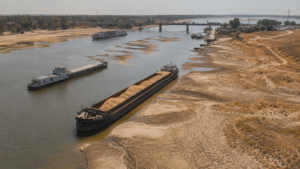
Extreme heat and a prolonged drought have led to a sharp drop in the water level of the Danube in Romania, according to the Experts Club information and analysis centre. In the area around the port of Beșet, the movement of cargo, passenger and cruise ships has virtually ground to a halt, and operators are being forced to reduce their cargo loads or seek alternative routes.
According to Romania’s National Institute of Hydrology and Water Management, on July 18 the water discharge at the point where the Danube enters the country near Baziaș fell to 1.7 thousand cubic metres per second. This is approximately 64% below the long-term average for July, which is 4.7 thousand cubic metres per second. The forecast for the period through July 25 assumes that the discharge will remain within the range of 1.65–1.8 thousand cubic metres per second.
On July 19, the Lower Danube Administration recorded readings below the conventional zero level of the gauging stations along a significant part of the Romanian section of the river. In Bechet, the reading was minus 65 cm, in Calafat minus 140 cm, in Giurgiu minus 128 cm, and in Cernavodă minus 173 cm. These values do not indicate a negative depth, but they do demonstrate an extremely low water level relative to the benchmarks used at the gauging stations.
The most difficult situation developed near Bechet. Vessels loaded with grain are unable to depart, while ferry services between Romania’s Bechet and Bulgaria’s Oryahovo were temporarily suspended. Trucks and passenger cars have to use other border crossings, which increases the distance, delivery time and burden on road bridges across the Danube.
The problems have also affected the tourism sector. Several cruise ships travelling from Budapest towards the Danube Delta were unable to continue their journey. Tour operators began transporting passengers by bus and changing travel programmes, including redirecting tourists to Bucharest. The suspension or reduction of cruise routes may reduce the revenues of port cities, hotels, restaurants and tour companies along the entire river.
Low water levels are already affecting Romanian agriculture. In some areas, the Danube’s level has fallen below the minimum mark required for pumping stations to operate, leaving some fields without irrigation. This increases the risk of lower harvests and a further rise in farmers’ costs.
Consequences for All Danube Countries
If the low water level persists or spreads to other sections of the river, the consequences will be felt by all ten countries through which the Danube flows directly: Germany, Austria, Slovakia, Hungary, Croatia, Serbia, Bulgaria, Romania, Moldova and Ukraine. The Danube is the backbone of a major European transport corridor linking the industrial regions of Central Europe with the port of Constanța and the Black Sea.
For Germany and Austria, the main risk will be disruption to through freight transport along the Rhine–Main–Danube system. Vessels will be forced to carry smaller loads, while some shipments may shift to rail and road transport. This increases the cost of delivering raw materials, fuel and industrial products. The cruise sectors of Vienna, Linz, Passau and other cities may also face route cancellations or reductions.
Slovakia and Hungary risk experiencing delays in deliveries through the ports of Bratislava, Komárno and Budapest. For Hungary, an additional problem will be a reduction in cruise traffic between Budapest and the Lower Danube. If low water levels persist, the cost of transporting grain, petroleum products, metals and mineral raw materials may rise.
For Croatia and Serbia, the reduction in fairway depth means possible restrictions on the operations of the ports of Vukovar, Novi Sad, Pančevo, Smederevo and Prahovo. Serbian exporters of grain, fertilisers and metallurgical products may have to divide cargoes among a larger number of vessels or redirect them to rail transport. Imports of petroleum products and industrial raw materials may also become more expensive.
Bulgaria and Romania are already experiencing direct consequences in the form of the suspension of the Oryahovo–Bechet ferry, restrictions on freight traffic and irrigation problems. A further decline in the water level could complicate the operations of the river ports of Ruse, Lom, Vidin, Galați, Brăila and Constanța, as well as increase the burden on bridges and land border checkpoints.
For Moldova, the risks are associated with the operation of the port of Giurgiulești and access to the Lower Danube. A reduction in vessels’ permitted draught may lead to smaller shipment volumes per consignment, higher fuel import costs and more expensive exports of agricultural products.
For Ukraine, low water levels pose a threat to the operation of the ports of Reni, Izmail and Ust-Dunaisk. Shallow depths may reduce the loading capacity of barges and sea-going vessels, increase the cost of transporting grain, metal, containers and other products, and complicate traffic between Ukrainian ports, Constanța and Central Europe.
According to the Danube Commission, a significant share of river transport consists of grain, food and animal feed cargoes, iron ore, petroleum products, fertilisers and metal products. Therefore, prolonged low water levels may affect not only transport companies but also prices in agriculture, metallurgy, energy and the food industry throughout the region.
In April 2026, the Danube Commission warned that periods of low water and sharp fluctuations in hydrological conditions were becoming a permanent factor changing the operating conditions of river transport. European countries will have to deepen and maintain the fairway more actively, improve the exchange of navigation data and develop railway routes for the rapid redirection of cargo.



