
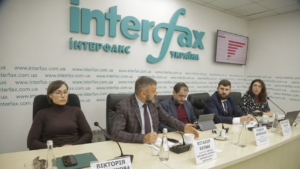
The personal participation of Ukrainian Parliament Commissioner for Human Rights Dmytro Lubinets in the humanitarian mission in the temporarily occupied town of Oleshky in Kherson region was positively assessed by 61.3% of surveyed Ukrainians, while 29.6% said their attitude toward the ombudsman had improved following reports of his involvement, according to the results of an Active Group study presented on Tuesday at a press conference at the Interfax-Ukraine news agency.
According to the survey, conducted on October 31 at the request of the publication Politarena, 28.4% of respondents assessed Lubinets’ decision to personally join the humanitarian operation very positively, while another 32.9% assessed it rather positively. Some 3.3% viewed the decision negatively, 23.5% expressed a neutral attitude, and another 11.9% reported having insufficient information.
Oleksandr Pozniy, director of Active Group, noted that the survey demonstrated a predominantly positive perception of the Ukrainian ombudsman’s actions, despite critical discussions surrounding his contacts with representatives of the Russian side.
“A huge proportion of people, 54%, said their attitude had not changed. But among those whose opinions did change, we see that approximately 4% changed their opinion in a negative direction, while almost 30% changed it in a positive direction. This speaks very clearly about the level of support for Dmytro Lubinets,” he said.
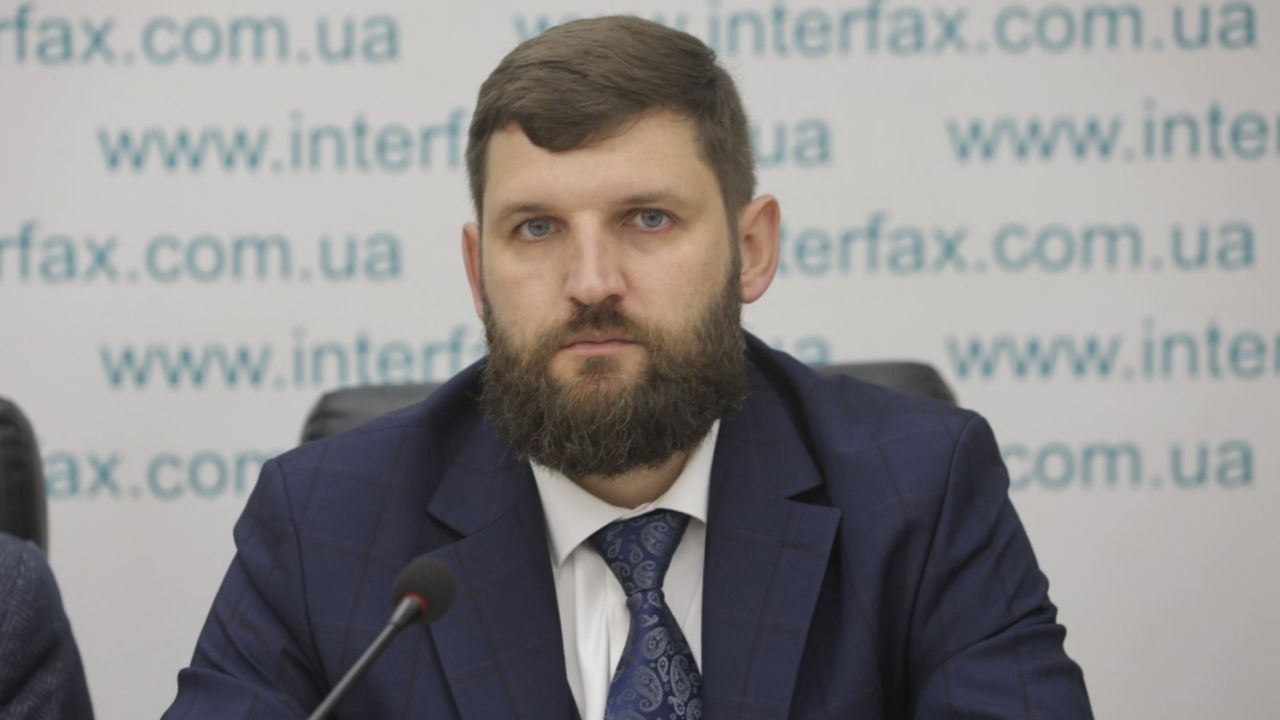
According to the study, 12.3% of respondents said their attitude toward Lubinets had improved significantly, while 17.3% said it had rather improved. It remained unchanged for 54.1% and worsened for 4.2%. Another 12.1% were unaware of his participation in the mission or were unable to answer.
A separate question concerned the impact of the personal participation of the head of a humanitarian operation on trust in its organizers as a whole.
In particular, 20.6% of respondents believe that such participation significantly increases trust, while 35.7% believe it rather increases trust. Meanwhile, 21.9% are convinced that it has no effect on trust, 4.9% believe it reduces trust, and 16.9% were undecided.
Andriy Yeremenko, founder of Active Group, explained that the personal presence of the mission leader in territory controlled by the enemy could have been an important factor in building confidence among people who agreed to be evacuated.
“People could simply have been afraid to board these buses, given their experience of living under Russian control. But the appearance of such a person, whose presence in a certain way guarantees security, gives them confidence and a willingness to leave. On the other hand, it is also a guarantee for all sides that there will be no violation of the ceasefire,” Yeremenko noted.
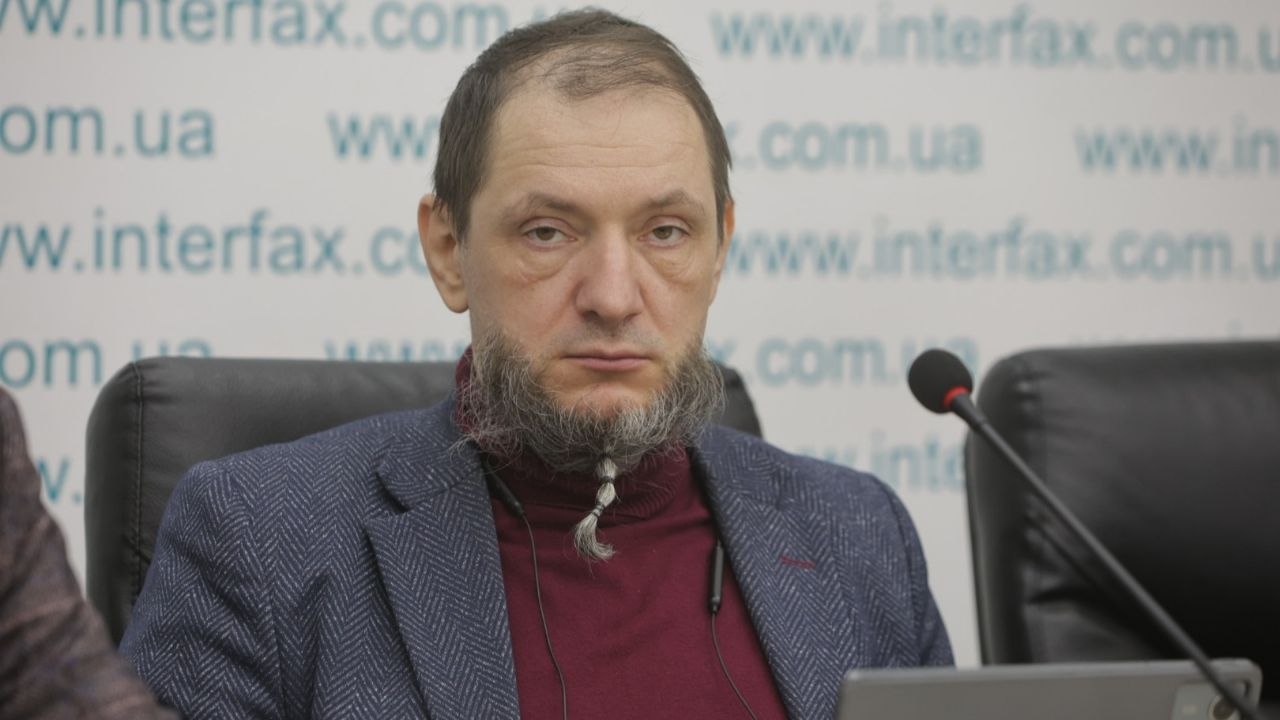
Viktoriya Plotnikova, editor-in-chief of Politarena, drew attention to the difference between the reactions of social media users and the assessments of survey respondents.
“The mission in Oleshky was truly unique, not only because of the local ceasefire but also because of communication with the enemy. We saw the Ukrainian and Russian ombudsmen communicating about such an important humanitarian issue as saving people. This, of course, caused a very emotional reaction among Ukrainians,” she said.
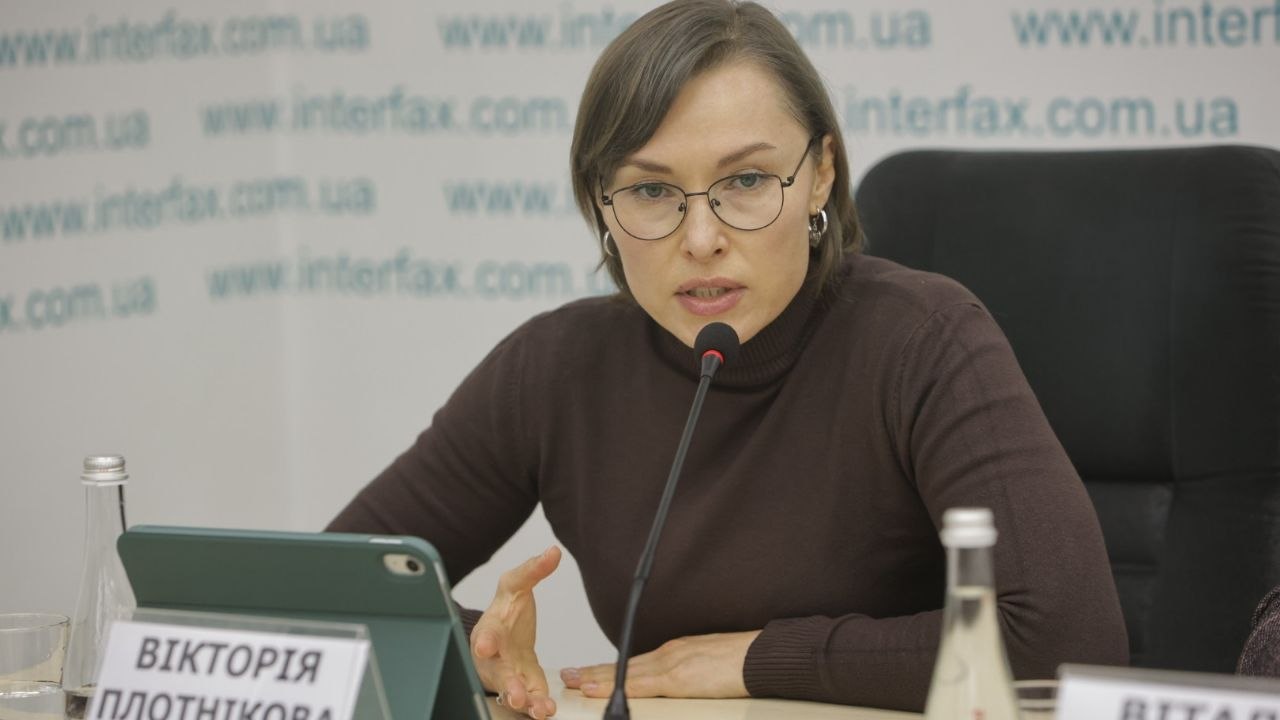
According to Plotnikova, it was precisely the unusual format of the operation and the public discussion surrounding direct communication between representatives of Ukraine and the Russian Federation that prompted the rapid sociological study.
Vitaliy Kulyk, director of the Center for Civil Society Studies, described Lubinets’ personal participation as one of the key factors in the implementation of the humanitarian mission.
“It was a risky operation; no one guaranteed the safety of Lubinets and his advisers. There was a constant sense of danger that a provocation might occur. But this did not happen, in particular thanks to the mediation mission of Melania Trump,” the expert noted.
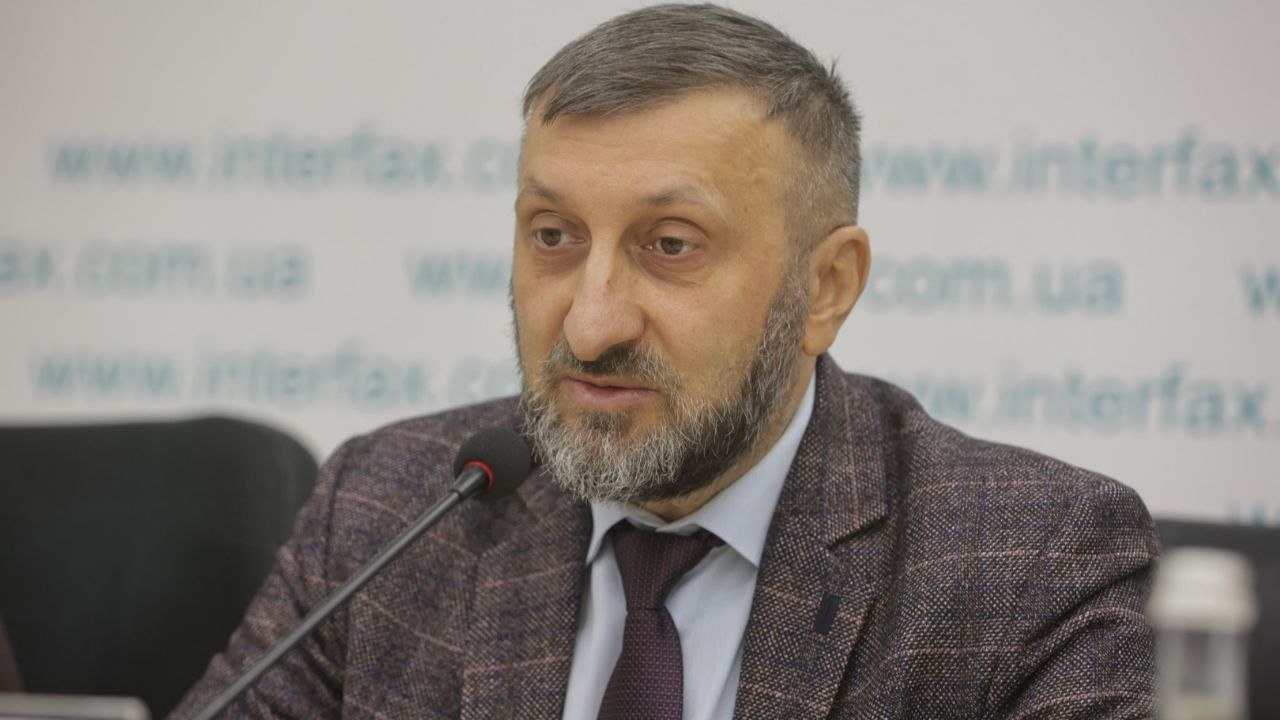
In Kulyk’s opinion, the experience of the humanitarian operation demonstrated the possibilities for direct working contacts between human rights commissioners even during wartime. At the same time, he emphasized that the effectiveness of the mission should be assessed not only by the evacuation itself but also by the subsequent support provided to the rescued citizens.
“We saved people, but what comes next? Those rescued from Oleshky are internally displaced persons. The issue of their reintegration into normal life is one of the issues we have no right to leave unattended,” Kulyk stressed.
He drew attention to the need to ensure that evacuees, many of whom are elderly, have access to social benefits, document restoration, medical assistance and other public services.
Overall, 93.6% of respondents support the humanitarian mission in Oleshky, while 93.8% consider it important. Some 57.1% of respondents gave positive assessments of the international mediation by US First Lady Melania Trump.
At the same time, the results concerning increased trust in organizers relate to the personal participation of humanitarian mission leaders in general and do not constitute a direct measurement of changes in Lubinets’ trust rating.
The survey was conducted by the research company Active Group on October 31, 2026, at the request of Politarena through the SunFlower Sociology online panel among 1,000 respondents. The stated statistical margin of error is ±3.1%. According to the organizers, the sample represents Ukraine’s adult population, excluding temporarily occupied territories.
ACTIVE GROUP, Dmytro Lubinets, humanitarian mission, SOCIOLOGY, UKRAINE, Олешки
Direct contacts between Ukrainian authorities and representatives of the Russian Federation exclusively for the purpose of providing humanitarian assistance and saving civilians are considered acceptable by 86.8% of surveyed Ukrainians, while 65.5% consider the use of an evacuation route through Russia and Belarus acceptable, according to the results of an Active Group study presented on Tuesday at a press conference at the Interfax-Ukraine news agency.
According to the survey, conducted on October 31 at the request of the publication Politarena, 49.6% of respondents consider direct humanitarian contacts with Russia unconditionally acceptable, while another 37.2% consider them acceptable under clearly defined conditions and supervision. Such contacts were described as unacceptable by 3.7% of respondents, while 9.5% were unable to decide.
Andriy Yeremenko, founder of the research company Active Group, noted that the results reflect Ukrainians’ pragmatic approach to humanitarian agreements, in which preserving human lives remains the main criterion of effectiveness.
“We see a demand for issues that can be resolved in Ukraine’s interests, on Ukrainian terms and for Ukraine’s benefit, to be resolved through negotiations rather than military action. This is a very widespread opinion among Ukrainians,” he emphasized.
At the same time, the sociologist stressed that willingness to engage in humanitarian contacts does not mean agreeing to political concessions to Russia.
According to him, Ukrainian society maintains its fundamental demands regarding the non-recognition of the occupation of Ukrainian territories, preventing any reduction in the country’s defense capabilities and restrictions on its sovereign decisions. At the same time, citizens are becoming more flexible in assessing practical mechanisms for achieving specific results.
A separate section of the study concerned the route of the humanitarian mission in the temporarily occupied town of Oleshky in Kherson region through the territories of Russia and Belarus.
According to the sociologists, 30.3% of respondents consider such a route acceptable, while another 35.2% consider it acceptable only with additional security guarantees. It was described as unacceptable by 11.1% of respondents, while 23.4% stated that they did not have sufficient information to assess it.
The question was formulated taking into account circumstances in which a direct route across the front line would require demining strategic areas and could weaken Ukraine’s defenses.
Yeremenko explained that the choice of route was determined not only by logistical possibilities but also by the need to take military risks into account.
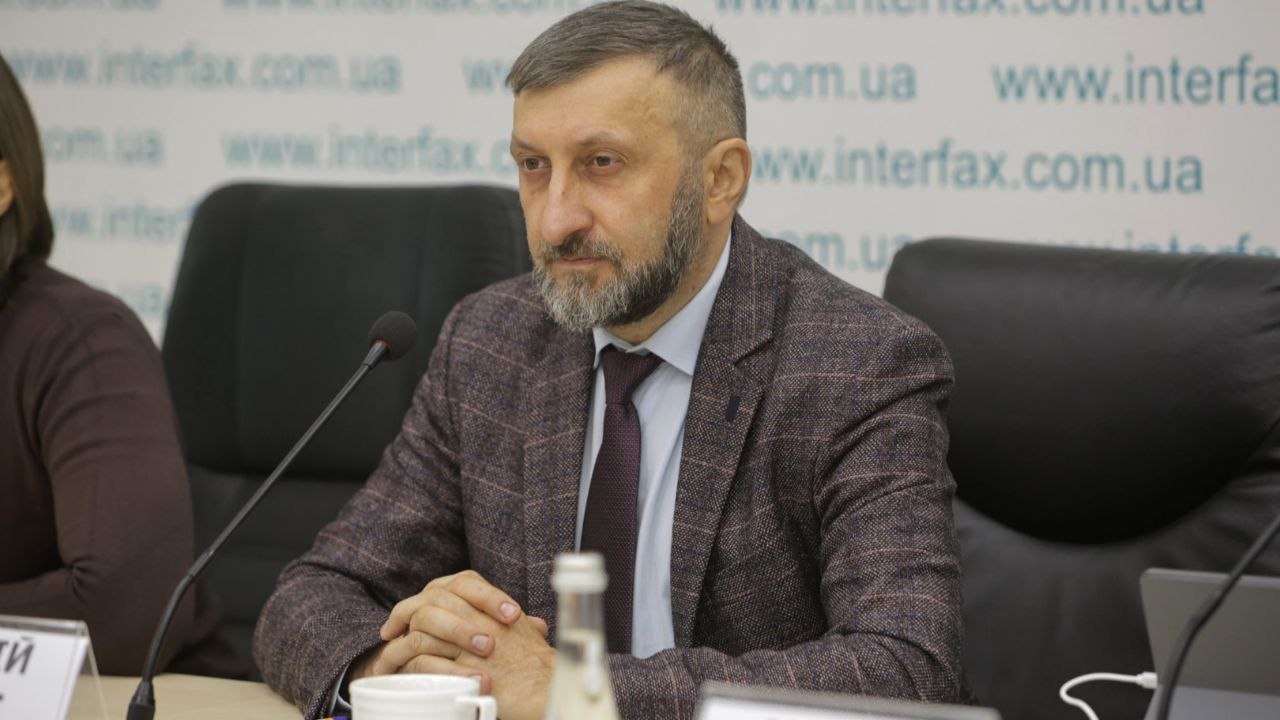
“Organizing a corridor for a bus to cross the front line means that demining would have to be carried out, and there would be a possibility of losing or exposing certain concealed positions. These are real problems for Ukrainian defense, at least potentially. The main thing is to evacuate people, because that is the principal result,” he said.
Oleksandr Pozniy, director of Active Group, drew attention to the significant difference between critical assessments widespread on social media and the survey results.
“We have repeatedly seen that the way social media and society online became agitated differed very significantly from what Ukrainians actually thought. It was important for us to measure this difference in order to understand what Ukrainians really think,” he said.
Vitaliy Kulyk, director of the Center for Civil Society Studies, commenting on the results, described the mission in Oleshky as unprecedented in terms of its implementation mechanism and the participation of Ukrainian Ombudsman Dmytro Lubinets.
“This is truly an extraordinary mission, since during a war an ombudsman travels to enemy territory and rescues citizens. As a rule, similar cases in the history of conflicts have taken place through the mediation of international organizations,” the expert stated.
In Kulyk’s opinion, the successful implementation of the humanitarian operation could create the preconditions for subsequent local agreements. At the same time, he cautioned that expanding such a practice would depend on the political situation and the parties’ willingness to fulfill their commitments.
According to the study, 72.3% of respondents identified preserving the lives and health of civilians as the most important result of the mission, 61.3% cited the safe and voluntary departure of those wishing to leave, and 39.8% cited the delivery of food, water and medicines.
The possibility of conducting similar humanitarian operations in the future was mentioned by 31.6% of respondents, while 29.7% mentioned maintaining the ceasefire and complying with the agreed arrangements. Respondents could select up to three answers.
Overall, 93.6% of respondents supported the humanitarian mission in Oleshky, while 93.8% consider it important for the civilian population.
The survey was conducted by Active Group on October 31, 2026, at the request of Politarena through the SunFlower Sociology online panel. The number of respondents was 1,000. The stated statistical margin of error is ±3.1%. According to the organizers, the sample represents Ukraine’s adult population, excluding temporarily occupied territories.
ACTIVE GROUP, humanitarian mission, RUSSIA, SOCIOLOGY, UKRAINE, Олешки
Following US participation in humanitarian agreements concerning the temporarily occupied town of Oleshky in Kherson region, 20.3% of surveyed Ukrainians improved their attitude toward the United States, while 57.1% positively assessed the role of US First Lady Melania Trump in reaching the agreements, according to the results of a sociological study by Active Group presented on Tuesday at a press conference at the Interfax-Ukraine news agency.
According to the survey, conducted on October 31 at the request of the publication Politarena, 6.2% of respondents said their opinion of the US had improved significantly, while 14.1% said it had somewhat improved. Meanwhile, 66.5% reported that their attitude toward the United States remained unchanged, 4.9% said it had worsened, and another 8.3% were unable to decide.
Andriy Yeremenko, founder of the research company Active Group, noted that successful humanitarian operations can positively influence the international image of countries involved in organizing them.
“Such humanitarian events, if they are repeated and are genuinely effective, will increase trust, particularly in the US. This event could become one of those that truly improve Ukrainians’ attitude toward the United States. A person who is safe is better off than a person who is in danger,” he said.
The sociologists separately examined attitudes toward Melania Trump’s personal role in the agreements concerning Oleshky. Her participation was assessed very positively by 29.7% of respondents and somewhat positively by 27.4%. A neutral position was expressed by 21.7%, a negative one by 5.7%, while 15.5% said they did not have sufficient information.
Oleksandr Pozniy, director of Active Group, pointed out that the US First Lady’s involvement in humanitarian mediation is not limited to the operation in Oleshky. In particular, he recalled previous efforts aimed at returning Ukrainian children.
According to the sociologist, tangible humanitarian results can positively influence citizens’ attitudes toward international partners even when assessments of their policies are contradictory.
Vitaliy Kulyk, director of the Center for Civil Society Studies, described the humanitarian operation in Oleshky as a precedent for diplomatic mediation carried out without the direct involvement of traditional international humanitarian organizations.
“This is not institutional diplomacy at the level of foreign ministers or the US State Department. It was specifically Melania Trump’s team that maintained constant contact with the Ukrainian and Russian ombudsmen. What was achieved through her team’s diplomacy had not been achieved by anyone before,” Kulyk said.
In the expert’s opinion, the agreements reached demonstrated the potential of personal mediation and working contacts between representatives of the parties even under conditions of full-scale war.
At the same time, Viktoriya Plotnikova, editor-in-chief of Politarena, cautioned against excessive optimism regarding the repetition of similar operations. According to her, the mission’s success resulted from a combination of favorable political circumstances and personal interaction among the participants in the negotiations.
“Here, it is cooperation not between institutions but, most likely, between individuals, which coincided with a favorable situation both with the United States and in Russia. Therefore, it is very difficult to predict what will happen next. Of course, I hope that there will be such successful humanitarian missions,” she emphasized.
Overall, 93.6% of surveyed Ukrainians support the humanitarian operation in Oleshky, while 93.8% consider it important for the civilian population. The decision by Ukrainian Parliament Commissioner for Human Rights Dmytro Lubinets to personally join the mission was positively assessed by 61.3% of respondents.
The results concerning changes in attitudes toward the US reflect respondents’ self-assessments following reports about the humanitarian agreements, rather than a comparison of indicators from two separate surveys.
The Active Group study was conducted on October 31, 2026, at the request of Politarena through the SunFlower Sociology online panel among 1,000 respondents. The stated statistical margin of error is ±3.1%. According to the organizers, the sample represents Ukraine’s adult population, excluding temporarily occupied territories.
ACTIVE GROUP, humanitarian mission, Melania Trump, SOCIOLOGY, UNITED STATES, Олешки
Latvia continues to enjoy a high level of positive perception among Ukrainians: in August 2026, 68.3% of respondents viewed the country positively, while only 3.9% viewed it negatively. Compared to March, the share of positive assessments has decreased slightly; however, the country continues to rank among the nations with the highest levels of public favor, according to the Experts Club Information and Analytical Center.
According to the results of the August survey, 39.7% of Ukrainians view Latvia entirely positively, and 28.6% view it mostly positively. 26.6% of respondents hold a neutral position. 2.5% view the country mostly negatively, 1.4% view it entirely negatively, and another 1.2% were undecided.
The balance of positive and negative assessments stands at plus 64.4 percentage points. Thus, positive attitudes toward Latvia outnumber negative ones by more than 17 times. Overall, the countries of Northern Europe and the Baltic states maintained some of the highest levels of positive attitudes among Ukrainians in the August wave of the survey.
In March 2026, 71.6% of respondents had a positive attitude toward Latvia: 42.4% viewed it entirely positively and 29.1% viewed it mostly positively. A neutral stance was held by 24.5% of respondents, negative assessments accounted for about 2.6%, and another 1.4% were undecided.
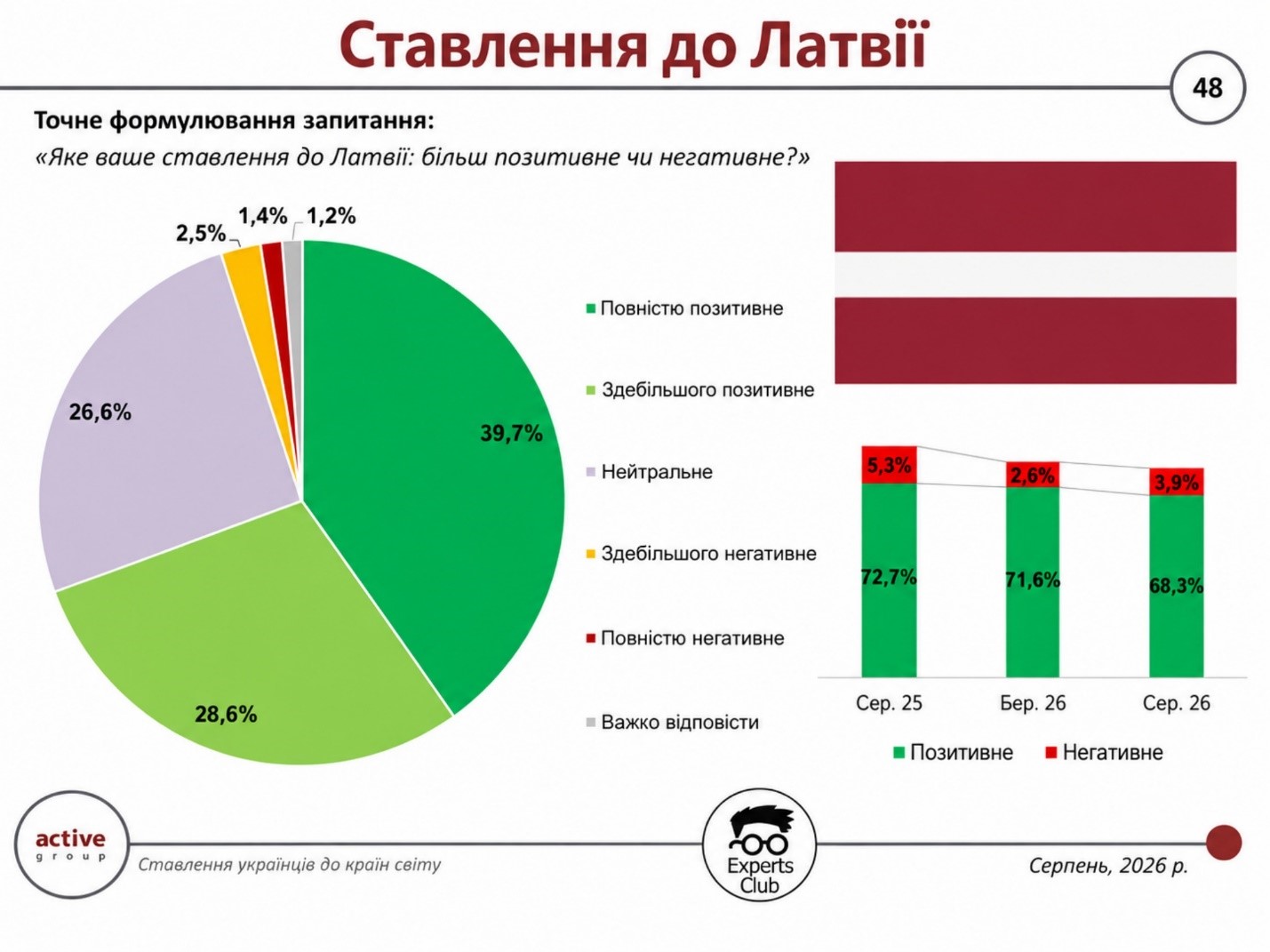
Thus, over five months, the share of positive assessments decreased by 3.3 percentage points—from 71.6% to 68.3%. The negative segment increased by approximately 1.3 percentage points, while the neutral segment rose by 2.1 percentage points. The balance between positive and negative attitudes decreased from approximately plus 69 to plus 64.4 percentage points.
At the same time, the most significant change occurred among respondents with the most strongly positive views: the share of entirely positive assessments decreased from 42.4% to 39.7%, while the share of mostly positive assessments remained close to previous levels—29.1% in March and 28.6% in August.
On an annual basis, the overall picture also remains stable. In August 2025, 72.7% of Ukrainians viewed Latvia positively, while 5.3% viewed it negatively. In other words, the current share of positive responses is slightly lower than a year ago, but the negative segment also remains smaller.
Oleksandr Pozniy, director of the research firm Active Group, commenting on the results of the previous survey wave regarding Latvia, attributed the high level of public support to the country’s consistent engagement with Ukraine.
“Ukrainians, in general, are very good at distinguishing between countries that demonstrate consistent support for Ukraine. At the same time, the level of positive attitude is shaped not only by political statements but also by concrete actions that people can experience firsthand. That is precisely why even small countries can have a very strong positive image,” Pozniy noted.
The latest wave of the survey shows a slight decline in positive assessments of Latvia, but no fundamental shift in public perception. More than two-thirds of Ukrainians continue to view the country positively, while the share of negative responses remains below 4%.
The survey was conducted in August 2026 using an online self-administered questionnaire via the SunFlowerSociology panel among 800 Ukrainian citizens aged 18 and older. The maximum theoretical margin of error for indicators at the 50% confidence level is ±3.5 percentage points.
ACTIVE GROUP, BALTIC STATES, EUROPEAN UNION, EXPERTS CLUB, international relations, LATVIA, Pozniy, PUBLIC OPINION, SOCIOLOGY, UKRAINE
Norway continues to enjoy one of the highest levels of positive perception among Ukrainians: in August 2026, 72% of respondents viewed the country positively, while only 2.7% viewed it negatively. Compared to March, the positive rating has declined slightly, but the overall pattern of assessments remains stable, according to the Experts Club Information and Analytical Center.
According to the results of the August survey, 35.8% of Ukrainians view Norway entirely positively, and 36.2% view it mostly positively. A neutral stance is held by 24.1% of respondents. 2.3% view the country mostly negatively, 0.4% view it entirely negatively, and another 1.2% were undecided.
The balance of positive and negative assessments stands at plus 69.3 percentage points. Thus, positive attitudes toward Norway outweigh negative ones by more than 26 times. According to the overall survey results, the country remains among the leaders in terms of public sentiment, alongside Canada, Sweden, the Netherlands, and Finland.
In March 2026, 72.7% of respondents had a positive attitude toward Norway. At that time, 37.1% of those surveyed described their attitude as entirely positive, and 35.7% as mostly positive. A neutral stance was held by 24.2%, a negative one by 1.9%, and another 1.2% were undecided.
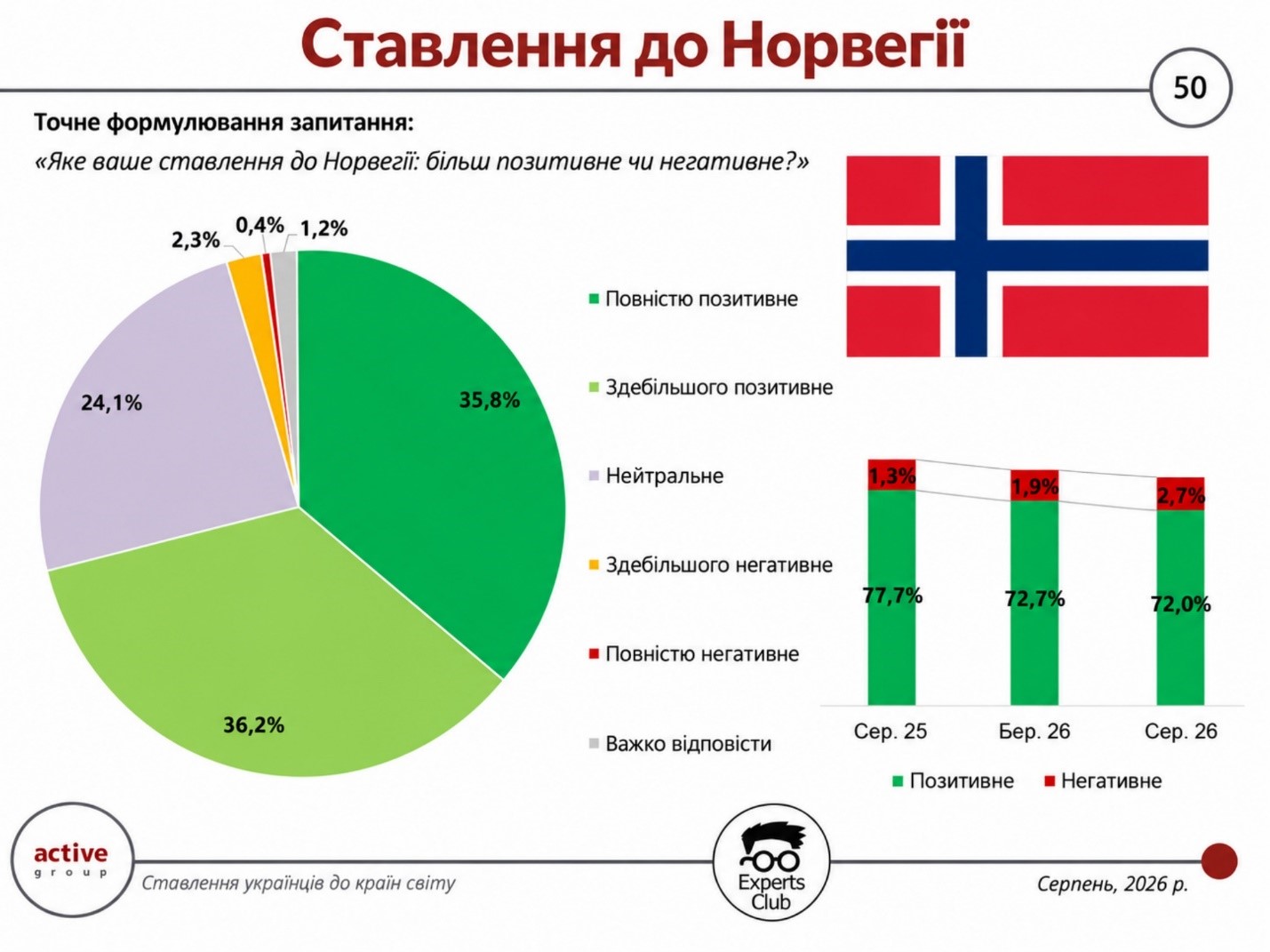
Thus, over the course of five months, the overall share of positive assessments decreased by only 0.7 percentage points—from 72.7% to 72%. The neutral segment remained virtually unchanged—24.2% in March versus 24.1% in August. At the same time, the share of negative responses increased by 0.8 percentage points—to 2.7%.
The balance between positive and negative attitudes decreased from approximately plus 70.8 to plus 69.3 percentage points. The changes remain insignificant and do not indicate a fundamental shift in attitudes toward the country: nearly three-quarters of Ukrainians continue to view Norway positively.
Oleksandr Pozniy, director of the research firm Active Group, commenting on the results of the previous wave, emphasized the stability of the established image of Norway.
“Ukrainians quite clearly differentiate between countries based on levels of trust and actual support. In the case of Norway, we see a consistently high level of positive sentiment, which is not shaped by current events but is based on a long-term perception of the country as a reliable partner. Even a slight decline in the figures does not change the overall picture—Norway remains one of the most positively viewed countries among all those surveyed,” Pozniy noted.
The results of the August wave effectively confirm this assessment. Despite a slight increase in the negative segment, it remains minimal, and the share of neutral responses has remained virtually unchanged. This distinguishes Norway from countries where public assessments have fluctuated significantly over the course of the year.
The previous survey wave was conducted in March 2026 among 800 Ukrainian citizens aged 18 and older using self-administered online questionnaires on the SunFlowerSociology panel. The sample was representative by age, gender, and region; the maximum theoretical margin of error for indicators at the 50% confidence level was ±3.5 percentage points.
ACTIVE GROUP, EXPERTS CLUB, international relations, NORTHERN EUROPE, NORWAY, Pozniy, PUBLIC OPINION, SOCIOLOGY, UKRAINE

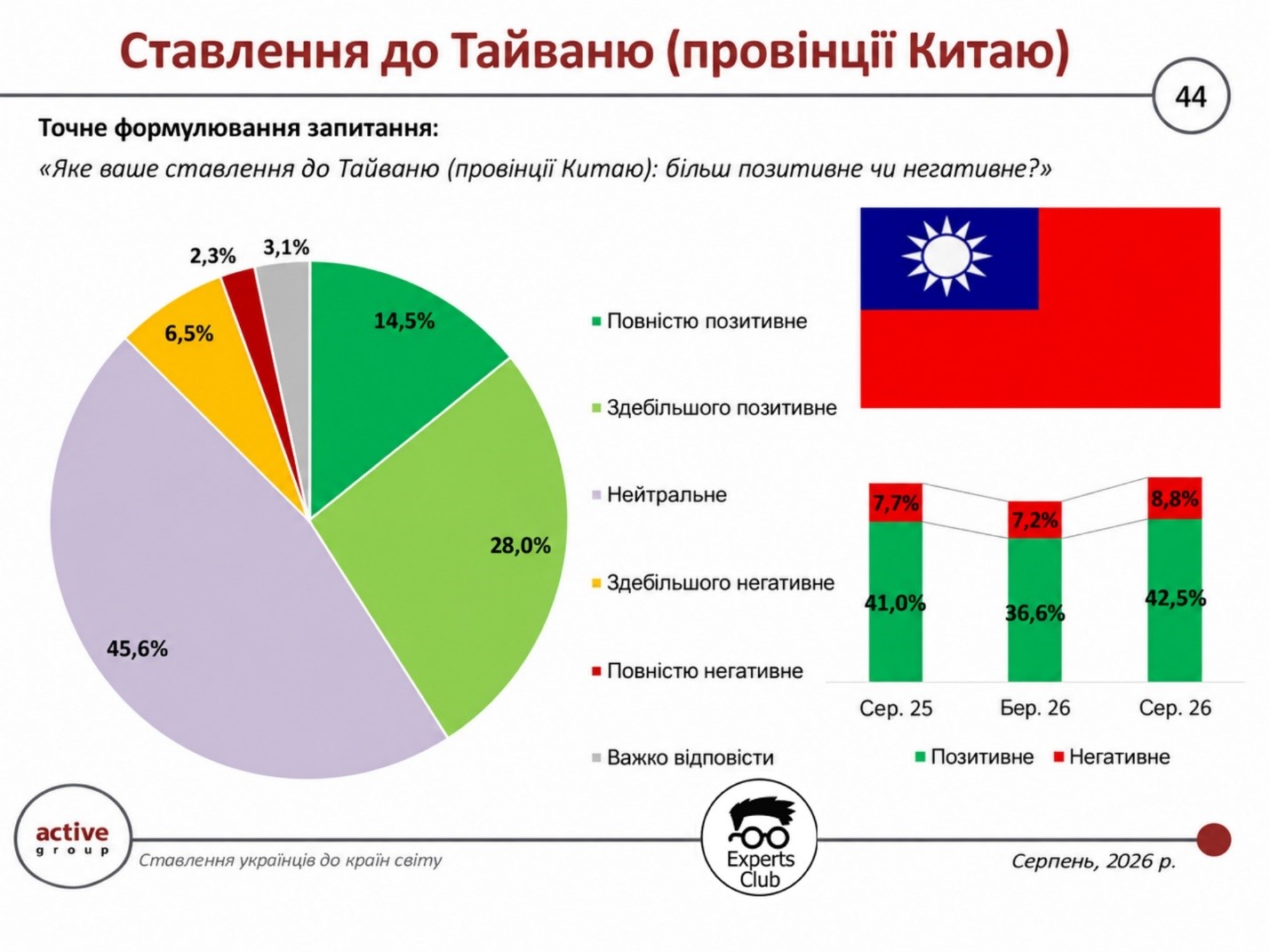
Ukrainians’ attitudes toward Taiwan in August 2026 became noticeably more positive compared to March, while China remains the country with the worst balance of positive and negative assessments among the 50 countries surveyed. 42.5% of respondents view Taiwan positively, while 18.2% view China positively, according to the Experts Club information and analytical center, based on the results of a joint study with Active Group, presented in September 2026.
Thus, positive attitudes toward Taiwan among Ukrainians are 2.3 times more prevalent than those toward the People’s Republic of China, despite the fact that Ukraine officially adheres to the “One China” policy and has no diplomatic relations with Taiwan.
According to the results of the August survey, 14.5% of Ukrainians have a completely positive attitude toward Taiwan, while 28% have a mostly positive attitude. 45.6% of respondents hold a neutral position, 6.5% have a mostly negative attitude, and 2.3% have a completely negative attitude. Another 3.1% of respondents were undecided.
The overall share of positive assessments is 42.5%, negative assessments—8.8%, and the net balance of positive and negative attitudes is +33.7 percentage points. Positive responses outnumber negative ones by nearly five to one.
By comparison, Ukrainians’ attitudes toward China are characterized by a predominance of negative assessments. 18.2% of respondents view China positively, 33.9% neutrally, and 43.6% negatively. Another 4.3% were undecided.
The balance of positive and negative attitudes toward China stands at minus 25.4 percentage points. This is the lowest result among all 50 countries and territories included in the study. The difference between the balances of attitudes toward Taiwan and China reaches 59.1 percentage points. At the same time, the share of negative assessments of China is nearly five times higher than the corresponding figure for Taiwan.
It is particularly telling that China remains Ukraine’s largest trading partner, while Taiwan plays a significantly smaller role in Ukraine’s foreign trade. Thus, the intensity of economic relations is not always accompanied by a corresponding level of public favor.
According to an analysis by Experts Club, Ukraine’s trade volume with China totaled approximately $14.68 billion in the first half of 2026. Of this amount, nearly $13.9 billion came from Chinese imports to Ukraine, while Ukrainian exports amounted to approximately $778 million.
China supplies Ukraine with electronics, batteries, transformers, electrical equipment, machinery, and other industrial products. Ukrainian exports to China consist mainly of iron ore, vegetable oils, oilseed processing products, soybeans, and other agricultural goods. However, China’s significant economic presence does not ensure a positive perception of the country among the Ukrainian public.
The trend in attitudes toward Taiwan over the past five months shows the opposite pattern.
In March 2026, 36.6% of Ukrainians viewed Taiwan positively, including 11.4% who viewed it entirely positively and 25.2% who viewed it mostly positively. 51.3% of respondents held a neutral position, 7.3% held a negative one, and another 4.9% were undecided.
In August, the share of positive assessments rose by 5.9 percentage points, to 42.5%. Meanwhile, the neutral segment shrank by 5.7 percentage points, to 45.6%.
The share of negative responses also increased slightly—from 7.3% to 8.8%—but the growth in the positive segment was significantly more pronounced.
Changes occurred in both categories of positive attitudes. The share of fully positive assessments increased from 11.4% to 14.5%, while the share of mostly positive assessments rose from 25.2% to 28%.
As a result, the balance of positive and negative attitudes toward Taiwan improved from approximately plus 29.4 percentage points in March to plus 33.7 in August 2026. This also slightly exceeds the figure for August 2025, when the balance stood at plus 33.3 points.
At the same time, the balance of attitudes toward China has worsened over the past five months: in March 2026, it stood at minus 21.7 percentage points, and in August, it was minus 25.4. However, compared to August 2025, when this figure stood at minus 28.7 points, the negative balance has narrowed slightly.
Oleksandr Pozniy, director of the research company Active Group, commenting on the previous wave of the study, drew attention to the importance of public awareness in shaping attitudes toward countries and territories with which Ukrainians have limited direct experience.
Maksym Urakin, founder of the Experts Club information and analytical center and a candidate of economic sciences, commenting on the survey results, emphasized the need to distinguish between public perception of individual countries and Ukraine’s long-term economic interests.
In his view, the negative attitude of a significant portion of Ukrainians toward China should not lead to a curtailment of economic ties with the world’s second-largest economy. On the contrary, the scale of trade between the two countries requires systematic efforts to maintain mutual trust, resume dialogue, and expand cooperation.
“It is extremely important for Ukraine and China to maintain good, trusting relations. We must remember that our countries have a long history of cooperation, and back in 2011–2013, the foundation for a strategic partnership was laid at the highest state level. These agreements should not be forgotten, as they were designed to last for decades and envisaged the development of trade, investment, infrastructure projects, and industrial and scientific-technical cooperation,” Urakin noted.
He recalled that on June 20, 2011, Ukrainian President Viktor Yanukovych and Chinese President Hu Jintao signed a Joint Declaration in Kyiv on the establishment and development of strategic partnership relations between the two countries.
The next important step was Yanukovych’s state visit to China in December 2013. During talks with Chinese President Xi Jinping on December 5, the Treaty on Friendship and Cooperation between Ukraine and China, a Joint Declaration on Further Deepening Strategic Partnership Relations, and the Program for the Development of Strategic Partnership Relations for 2014–2018 were signed.
The Verkhovna Rada of Ukraine ratified the Treaty on Friendship and Cooperation on May 15, 2014. The relevant documents provided for the development of cooperation in the trade and economic, agricultural, energy, infrastructure, aerospace, and humanitarian spheres.
According to Urakin, this legal framework remains an important historical legacy of Ukrainian-Chinese relations, although specific areas of cooperation need to be revised in light of current conditions, the war, and Ukraine’s economic interests.
The founder of Experts Club drew particular attention to the sensitivity of the Taiwan issue for official Beijing.
“Ukrainians should not try to exploit the contradictions between China and Taiwan. We must understand that this is an extremely sensitive issue for the Chinese state and society. Ukraine has its own official position on the ‘One China’ policy, and it is important that discussions surrounding Taiwan do not become an additional factor in the deterioration of Ukrainian-Chinese relations. Instead, we need to actively develop a constructive dialogue with the PRC, seek common economic interests, and rebuild trust,” Urakin believes.
In his view, one of the key practical areas of focus should be changing the structure of Ukrainian exports to China.
Currently, bilateral trade is characterized by a significant imbalance: Ukraine imports mainly industrial products and equipment, while the structure of Ukrainian exports depends largely on the supply of raw materials and agricultural goods.
“Our task is not simply to sell grain, ore, or other raw materials to China. We need to be much more proactive in opening up the Chinese market to Ukrainian finished products with high added value. These could include highly processed food products, equipment, machinery, pharmaceuticals, technological solutions, and other competitive Ukrainian goods. The Chinese market is extremely large, but it requires systematic work, an understanding of local consumers, product certification, and long-term relationships with partners,” Urakin emphasized.
He believes that Ukrainian government agencies, trade representatives, industry associations, and companies need to work more actively to remove barriers to the entry of finished products into the Chinese market.
Specifically, this involves harmonizing veterinary and phytosanitary requirements, certifying food products, developing logistics routes, promoting Ukrainian brands, and finding local distributors.
An important avenue could be the participation of Ukrainian manufacturers in specialized trade shows in China, the holding of industry-specific business forums, and the organization of direct negotiations between companies.
According to Urakin, improving the informational presence of China in Ukraine and of Ukraine in China is of particular importance.
“Diplomacy and economics must work together. If there are extensive trade ties between the two countries but public perception remains negative, this indicates a need for better communication. It is important for Chinese partners to tell Ukrainians more about the concrete results of cooperation, and for Ukrainian businesses to more actively showcase their own technologies, products, and investment opportunities in China. “In the long run, this could contribute to more balanced economic relations,” noted the founder of Experts Club.
At the same time, he emphasized that the expansion of economic cooperation must be based on the principles of mutual respect, international law, and the sovereignty and territorial integrity of states.
In the case of Taiwan, the survey results paint a different picture: despite the absence of official diplomatic relations with Ukraine, the perception of Taiwan among respondents is predominantly positive or neutral.
At the same time, these sociological indicators should not be interpreted as support by Ukrainians for a specific option for a political resolution of the Taiwan issue. The study measured respondents’ general attitudes, not their position on Taiwan’s status under international law.
Ukraine established diplomatic relations with the People’s Republic of China on January 4, 1992, and adheres to the “One China” policy. In a joint Ukrainian-Chinese communiqué dated October 31, 1992, Ukraine recognized the government of the PRC as the sole legitimate government of China and confirmed that it would not establish official relations with Taiwan. This position remains the foundation of Ukraine’s official diplomatic stance on the Taiwan issue.
At the same time, Taiwan has its own elected governing bodies, administrative system, and economic policies, and exercises de facto self-government. The People’s Republic of China considers Taiwan to be part of its territory.
Thus, the findings of Experts Club and Active Group demonstrate a significant discrepancy between a state’s diplomatic position, the economic structure of its foreign relations, and public perceptions of specific countries and territories.
Ukrainians’ positive attitude toward Taiwan continues to grow, but respondents with a neutral stance remain the largest single group. At the same time, China, despite its leading role in Ukraine’s foreign trade, continues to have the lowest public sentiment rating among the countries surveyed.
According to Maksym Urakin, these results should serve as a basis not for reducing international economic contacts, but for more systematic and pragmatic cooperation with partners. This is particularly true for China, where Ukraine has significant potential to expand exports of finished goods and develop industrial cooperation.
The study “Ukrainians’ Attitudes Toward Countries Around the World” was conducted in August 2026 by Active Group in collaboration with the Experts Club Information and Analytical Center using a self-administered online questionnaire on the SunFlowerSociology panel. The survey included 800 Ukrainian citizens aged 18 and older. The sample was representative in terms of age, gender, and region. The maximum stated theoretical statistical margin of error for indicators at the 50% level is ±3.5 percentage points at a 95% confidence level.
This is the third wave of the study, following surveys conducted in August 2025 and March 2026.



