

In August 2026, the majority of Ukrainians maintained a neutral attitude toward Saudi Arabia—57.5% of respondents gave this answer. Twenty-nine percent of those surveyed viewed the country positively, while 9% viewed it negatively. Compared to the previous wave of the survey, the distribution of opinions changed only slightly, according to the Experts Club Information and Analytical Center.
According to the results of the August survey, 5.5% of Ukrainians have a completely positive attitude toward Saudi Arabia, while 23.5% have a mostly positive attitude. A neutral stance is held by 57.5% of respondents. Seven percent view the country mostly negatively, 2% view it entirely negatively, and another 4.5% were undecided.
The balance of positive and negative assessments stands at plus 20 percentage points. Thus, positive attitudes outnumber negative ones by more than three to one; however, the large neutral group remains the defining characteristic of perceptions of Saudi Arabia. In the overall picture of Ukrainians’ attitudes toward Middle Eastern countries, Saudi Arabia also ranks among those toward which neutral assessments predominate.
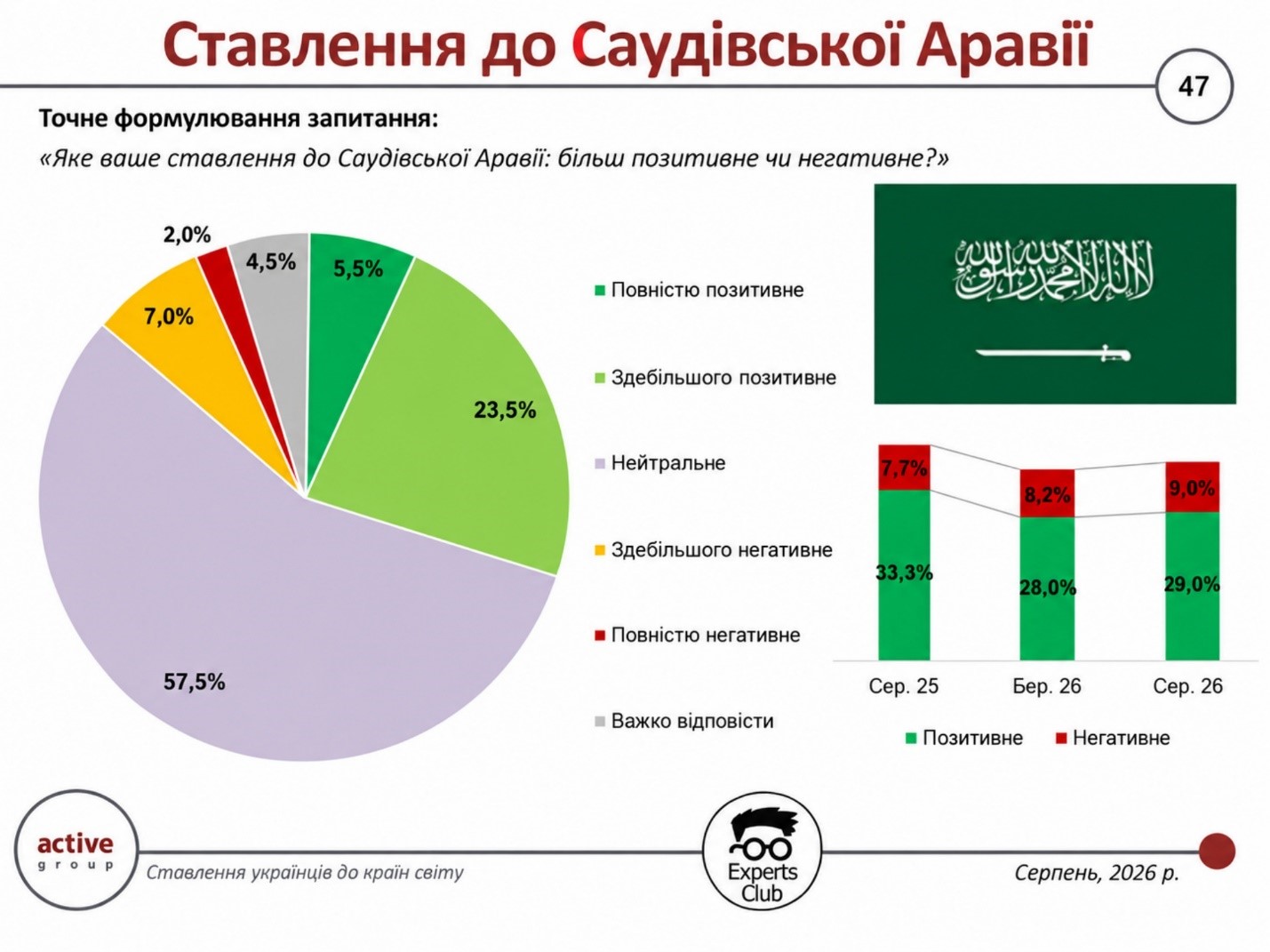
Compared to March 2026, the figures remained nearly stable. In the previous survey, 8.4% of respondents had a completely positive attitude toward Saudi Arabia, and 19.6% had a mostly positive attitude—meaning the combined share of positive responses was 28%. A neutral stance was held by 58.7% of respondents, 8.2% viewed the country negatively, and another 5.1% were undecided.
Thus, over the course of five months, the share of positive assessments increased by 1 percentage point—from 28% to 29%—while negative assessments rose by 0.8 percentage points, to 9%. The neutral segment decreased by 1.2 percentage points. The balance between positive and negative attitudes remained virtually unchanged: approximately +19.8 percentage points in March and +20 percentage points in August.
At the same time, changes occurred within the positive segment. The share of fully positive assessments fell from 8.4% to 5.5%, while the share of mostly positive assessments rose from 19.6% to 23.5%. In other words, the overall share of favorable responses remained stable but became less categorical.
Maksym Urakin, founder of the Experts Club Information and Analytical Center and a candidate of economic sciences, commenting on the survey results and the significant share of neutral attitudes toward a number of Ukraine’s partners, emphasized the need for more active public communication.
“The first recommendation is to regularly showcase concrete achievements, specific actions, and the presence here of foundations, embassies, teams, and diplomats in the humanitarian sphere and in science. Second, we must be open to questions and inquiries from the media and the public. We also need to use our sociological data to draw conclusions and strengthen our relationships, particularly trade relations,” Urakin noted.
In the case of Saudi Arabia, the results of the two survey waves show a high degree of stability in public perceptions. Nearly three-fifths of Ukrainians continue to hold a neutral position, while positive attitudes consistently outweigh negative ones by approximately 20 percentage points.
The survey was conducted in August 2026 using an online self-administered questionnaire via the SunFlowerSociology panel among 800 Ukrainian citizens aged 18 and older. The previous survey wave in March also included 800 respondents; the sample was representative by age, gender, and region, with a maximum theoretical margin of error of ±3.5 percentage points for indicators at the 50% confidence level.
ACTIVE GROUP, EXPERTS CLUB, international relations, MIDDLE EAST, PUBLIC OPINION, SAUDI ARABIA, SOCIOLOGY, UKRAINE, URAKIN
Austria continues to be viewed predominantly positively by Ukrainians: in August 2026, about 52.7% of respondents expressed a positive attitude toward the country, while only 2.7% expressed a negative one. At the same time, 41.7% of those surveyed hold a neutral position, which remains a distinctive feature of perceptions of Austria, according to the Experts Club Information and Analytical Center.
According to the results of the August survey, 15.3% of Ukrainians have a completely positive attitude toward Austria, and 37.4% have a mostly positive attitude. A neutral response was chosen by 41.7% of respondents. 2.3% view the country mostly negatively, only 0.4% view it entirely negatively, and another 2.9% were undecided.
Thus, the balance of positive and negative assessments, when rounded, stands at approximately plus 50 percentage points. There are nearly 20 times as many positive responses as negative ones; however, Austria differs from a number of other Western European countries in having a significantly higher proportion of neutral attitudes.
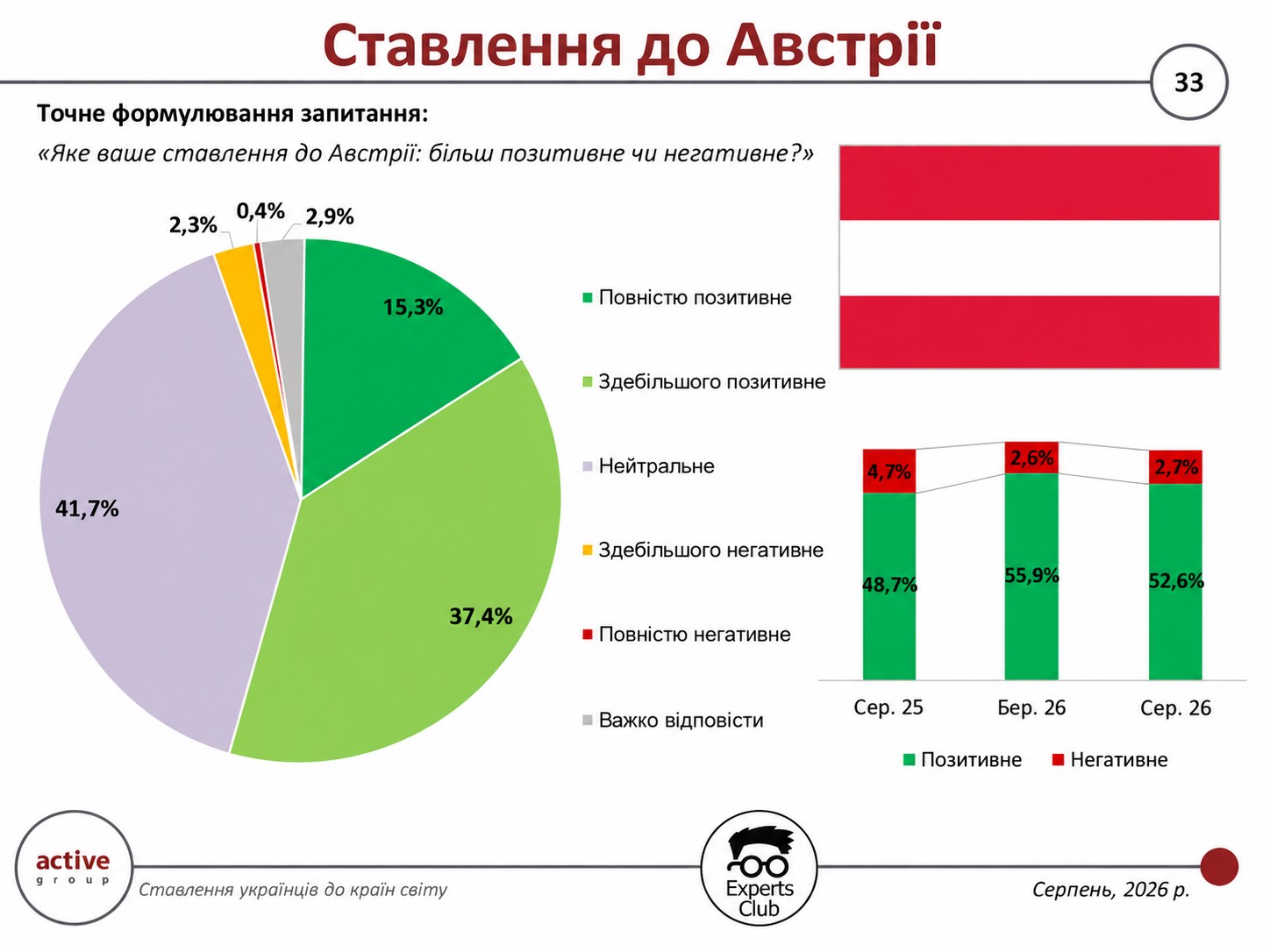
Compared to March 2026, the proportion of positive assessments has decreased slightly. In the previous survey wave, 17.5% of respondents had a completely positive attitude toward Austria, and 38.5% had a mostly positive attitude, meaning the combined positive rating was about 55.9%. A neutral stance was held by 40.3% of respondents, while about 2.6% expressed a negative attitude.
Thus, over the course of five months, the share of positive assessments decreased by approximately 3.2 percentage points—to 52.7%. The share of negative assessments remained virtually unchanged—about 2.6% in March compared to 2.7% in August—while the neutral segment increased by 1.4 percentage points. The most notable decline was in the share of entirely positive responses—from 17.5% to 15.3%.
This pattern indicates that the slight weakening of the positive rating is not accompanied by a shift toward a negative attitude among a significant portion of respondents. A neutral stance remains the primary alternative to a positive assessment of Austria.
Oleksandr Pozniy, director of the research company Active Group, when commenting on Ukrainians’ attitudes toward Austria, previously highlighted precisely this combination of a positive image of the country with a large neutral group.
“Austria is traditionally perceived by Ukrainians as a European country with high social standards, a rich cultural heritage, and a stable political system. Although Austria is not Ukraine’s main partner in foreign policy, the overall level of favorability remains positive,” Pozniy noted.
The current wave of the survey generally confirms this assessment: the negative segment remains very small, and changes are occurring primarily among positive and neutral responses. More than nine out of ten respondents view Austria positively or neutrally.
The survey was conducted in August 2026 using self-administered online questionnaires in the SunFlowerSociology panel among 800 Ukrainian citizens aged 18 and older. The previous survey wave in March also included 800 respondents; the sample was representative by age, gender, and region, with a maximum theoretical margin of error of ±3.5 percentage points for indicators at the 50% confidence level.
ACTIVE GROUP, AUSTRIA, EUROPEAN UNION, EXPERTS CLUB, international relations, Pozniy, PUBLIC OPINION, SOCIOLOGY, UKRAINE, WESTERN EUROPE
According to Experts Club, Moldova continues to be viewed predominantly positively by Ukrainians: in August 2026, 55.4% of respondents had a positive attitude toward the country, while 7.3% had a negative one. At the same time, more than a third of those surveyed—35.6%—hold a neutral view. Compared to March, the share of positive assessments has decreased slightly, reports the Experts Club Information and Analytical Center.
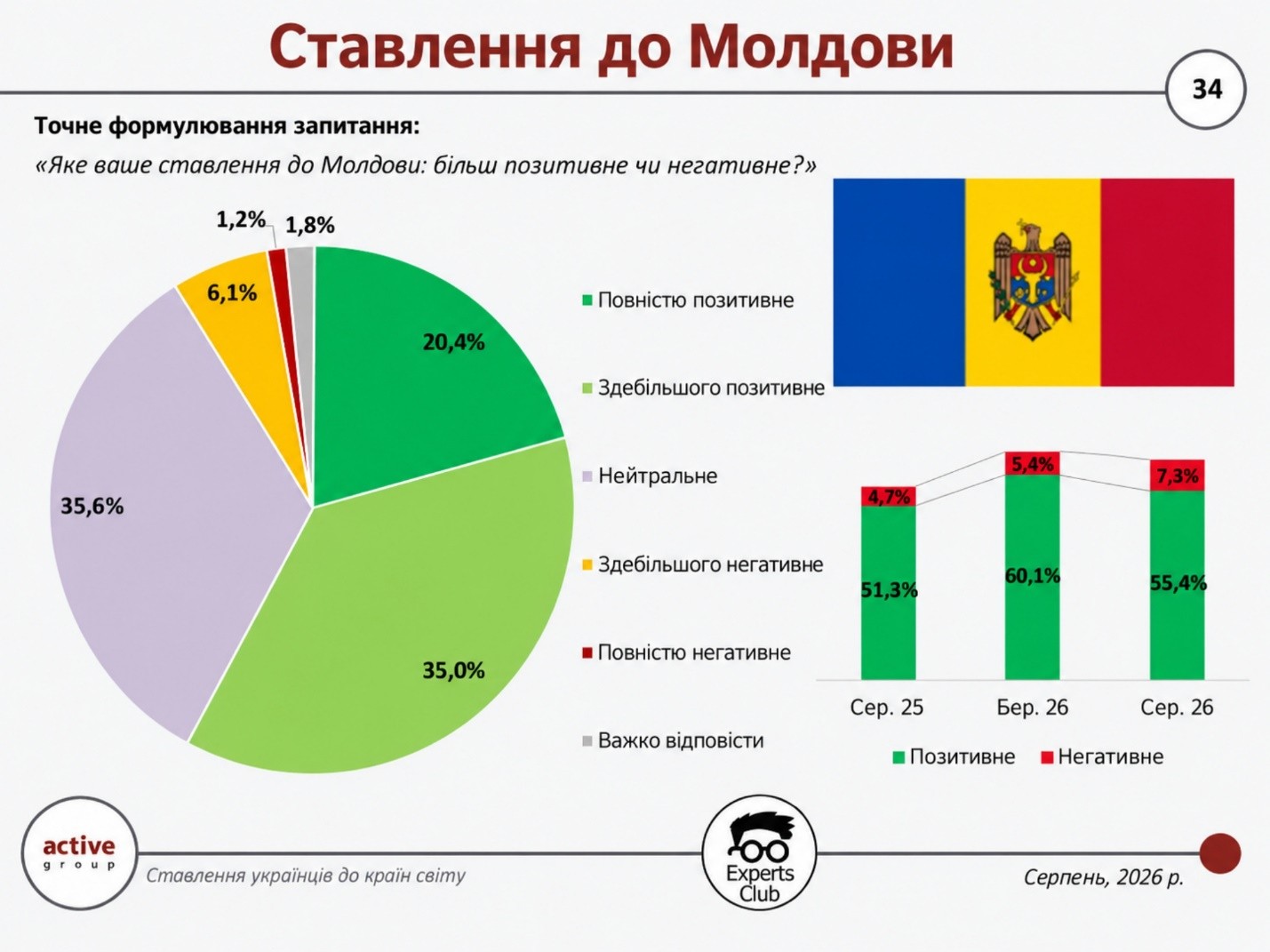
According to the results of the August survey, 20.4% of Ukrainians view Moldova entirely positively, and 35% view it mostly positively. A neutral attitude was expressed by 35.6% of respondents. 6.1% view the country mostly negatively, 1.2% completely negatively, and another 1.8% were undecided.
According to the rounded data in the table, the balance of positive and negative assessments is approximately plus 48.1 percentage points. Thus, positive attitudes toward Moldova outnumber negative ones by more than seven to one. Among the countries of Central and Eastern Europe, it is second only to the Czech Republic in terms of the balance of assessments.
In March 2026, 60.1% of respondents had a positive attitude toward Moldova: 22.8% viewed it entirely positively and 37.3% viewed it mostly positively. A neutral stance was held by 32.9% of respondents, 5.4% viewed the country negatively, and another 1.6% were undecided.
Thus, over the course of five months, the share of positive responses decreased by 4.7 percentage points—from 60.1% to 55.4%. Negative assessments increased by 1.9 percentage points, while the neutral segment grew by 2.7 percentage points. The balance between positive and negative attitudes decreased from approximately plus 54.7 to plus 48.1 percentage points, respectively.
At the same time, Moldova is of great importance to Ukraine not only as a neighboring country but also as a sales market. In the first half of 2026, Ukraine’s trade surplus with Moldova amounted to approximately $467 million, placing it third among partners with the largest trade surpluses, after Spain and Egypt.
Maksym Urakin, founder of the Experts Club information and analytical center and a candidate of economic sciences, emphasizes that it is important for Ukraine not only to maintain a presence in such markets but also to transform the positive trade balance into long-term economic results.
“To establish a foothold in these markets, it is not enough to simply produce a competitive product. We need long-term contracts, affordable insurance against military and commercial risks, export credit facilities, systematic trade diplomacy, harmonization of veterinary and phytosanitary procedures, as well as investments in ports, railways, border infrastructure, and overseas logistics centers. A trade surplus should not merely be a statistical difference between exports and imports, but rather a steady flow of foreign exchange earnings, taxes, investments, and jobs in Ukraine,” Urakin noted.
He also identifies Moldova as one of the markets where Ukraine already has a favorable starting position: “The most promising ‘growth points’ for Ukraine are a combination of markets with an already positive trade balance—Egypt, Moldova, and, to some extent, EU trade hubs—along with tools that reduce barriers: agreements, standardization, and logistics,” Urakin emphasized.
Thus, the latest round of the survey reveals a slight decline in positive attitudes toward Moldova, but no change in the overall picture: more than half of Ukrainians view the country positively, the negative segment remains small, and economic relations are characterized by a significant trade surplus for Ukraine.
ACTIVE GROUP, CENTRAL AND EASTERN EUROPE, EXPERTS CLUB, FOREIGN TRADE, international relations, MOLDOVA, PUBLIC OPINION, SOCIOLOGY, UKRAINE
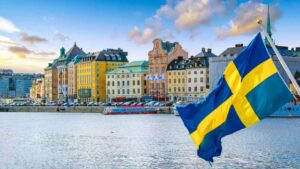
Sweden remains among the countries with the highest level of positive perception among Ukrainians: in August 2026, 71.4% of respondents expressed a positive attitude toward it, while only 0.8% expressed a negative one. Compared to March, the share of positive assessments decreased slightly, but negative attitudes also declined, according to the Experts Club Information and Analytical Center.
According to the results of the August survey, 31.9% of Ukrainians have a completely positive attitude toward Sweden, and 39.5% have a mostly positive attitude. A neutral stance is held by 26.2% of respondents. Only 0.8% view the country mostly negatively; no entirely negative assessments were recorded in the survey, and another 1.6% were undecided.
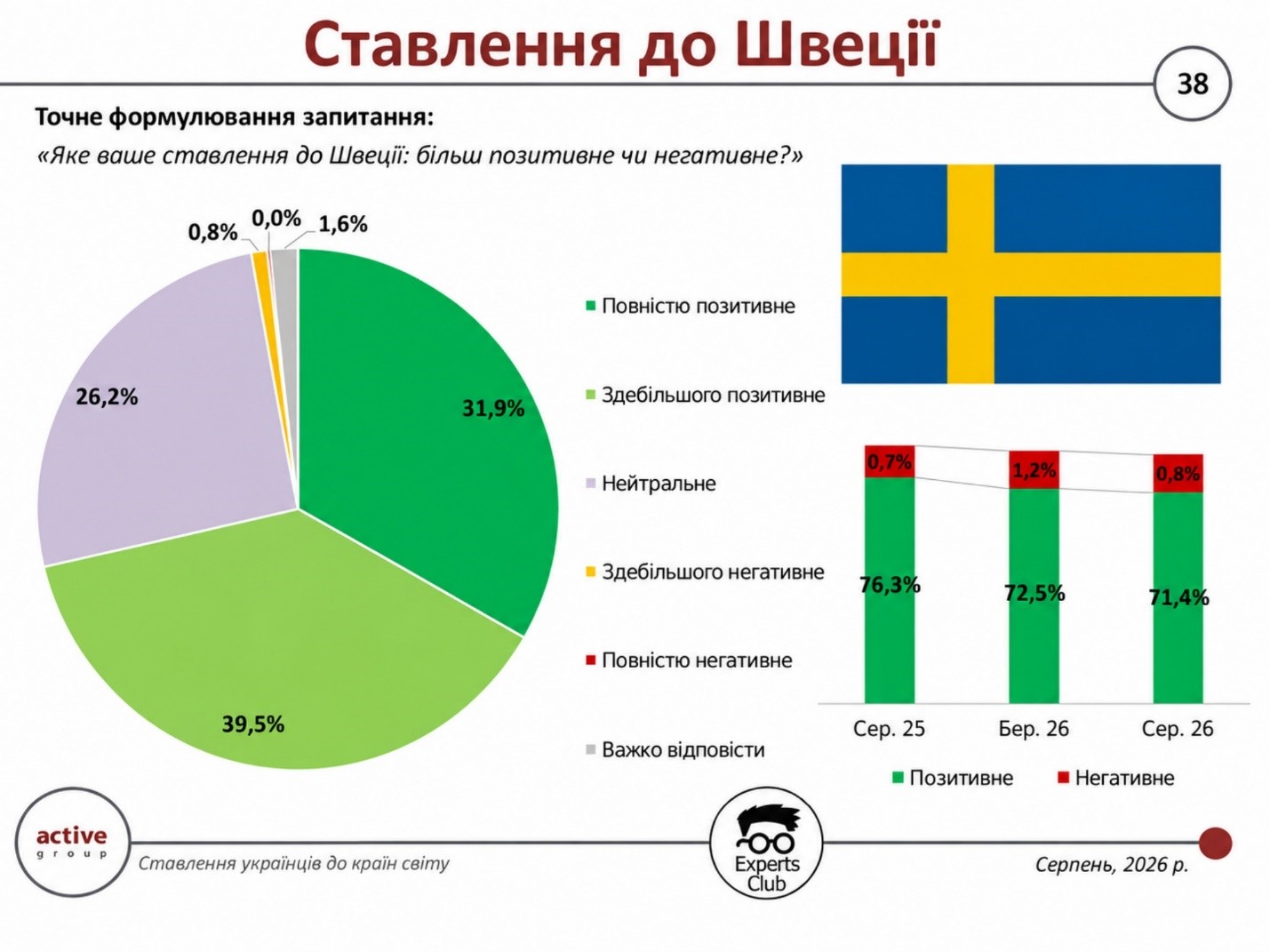
The balance between positive and negative assessments stands at plus 70.6 percentage points. By this measure, Sweden ranks among the highest of all countries included in the study. Positive attitudes outnumber negative ones by nearly 90 to 1.
In March 2026, 72.5% of respondents viewed Sweden positively: 35% viewed it entirely positively and 37.5% viewed it mostly positively. At that time, 24.7% of respondents held a neutral stance, while negative attitudes accounted for about 1.2%.
Thus, over the course of five months, the share of positive assessments decreased by only 1.1 percentage points—from 72.5% to 71.4%. Negative responses decreased by 0.4 percentage points, while the neutral segment increased by 1.5 percentage points—from 24.7% to 26.2%. The balance between positive and negative attitudes remained virtually unchanged—from approximately plus 71.3 to plus 70.6 percentage points.
At the same time, there was a certain redistribution within the positive segment. The share of fully positive assessments decreased from 35% to 31.9%, while the share of mostly positive assessments rose from 37.5% to 39.5%. This indicates a moderate decline in the intensity of positive attitudes rather than a deterioration in the country’s overall image.
Oleksandr Pozniy, director of the research firm Active Group, commented on the previous wave of the survey by highlighting the stability of Ukrainians’ attitudes toward Sweden.
“Sweden remains a country with a very high level of trust among Ukrainians, and this is evident from the structure of the responses. At the same time, we are observing a certain increase in the share of neutral assessments, which indicates not a change in attitude but a decrease in its intensity. This is a typical effect for countries that are not constantly in the spotlight,” Pozniy noted.
The new results effectively confirm this trend. The proportion of neutral responses continued to rise moderately, but this was not accompanied by an increase in negative attitudes. Sweden remains one of the countries with the most consistently positive image in Ukrainian society.
The previous wave of the survey was conducted in March 2026 among 800 Ukrainian citizens aged 18 and older using self-administered online questionnaires in the SunFlowerSociology panel. The sample was representative by age, gender, and region; the maximum theoretical margin of error for indicators at the 50% confidence level was ±3.5 percentage points.
ACTIVE GROUP, EXPERTS CLUB, international relations, NORTHERN EUROPE, Pozniy, PUBLIC OPINION, SOCIOLOGY, SWEDEN, UKRAINE
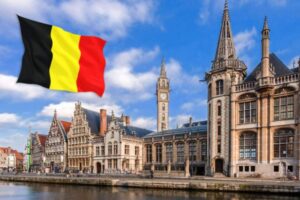
Ukrainians’ attitudes toward Belgium in August 2026 improved slightly compared to the previous survey wave: 59.8% of respondents view the country positively, while only 1.4% view it negatively. At the same time, more than a third of those surveyed—36%—remain neutral, according to the Experts Club Information and Analytical Center.
According to the results of the August survey, 21.1% of Ukrainians view Belgium entirely positively, and 38.7% view it mostly positively. A neutral attitude was expressed by 36% of respondents. Only 0.8% view the country mostly negatively, 0.6% view it entirely negatively, and another 2.7% were undecided.
According to the table, the balance of positive and negative assessments is +58.4 percentage points. Thus, Belgium remains among the Western European countries with a distinctly positive perception, and negative attitudes toward it are virtually marginal.
In March 2026, 58.7% of respondents viewed Belgium positively: 19.3% viewed it entirely positively and 39.4% viewed it mostly positively. 37.1% of respondents held a neutral view, 2.3% held a negative view, and another 1.9% were undecided.
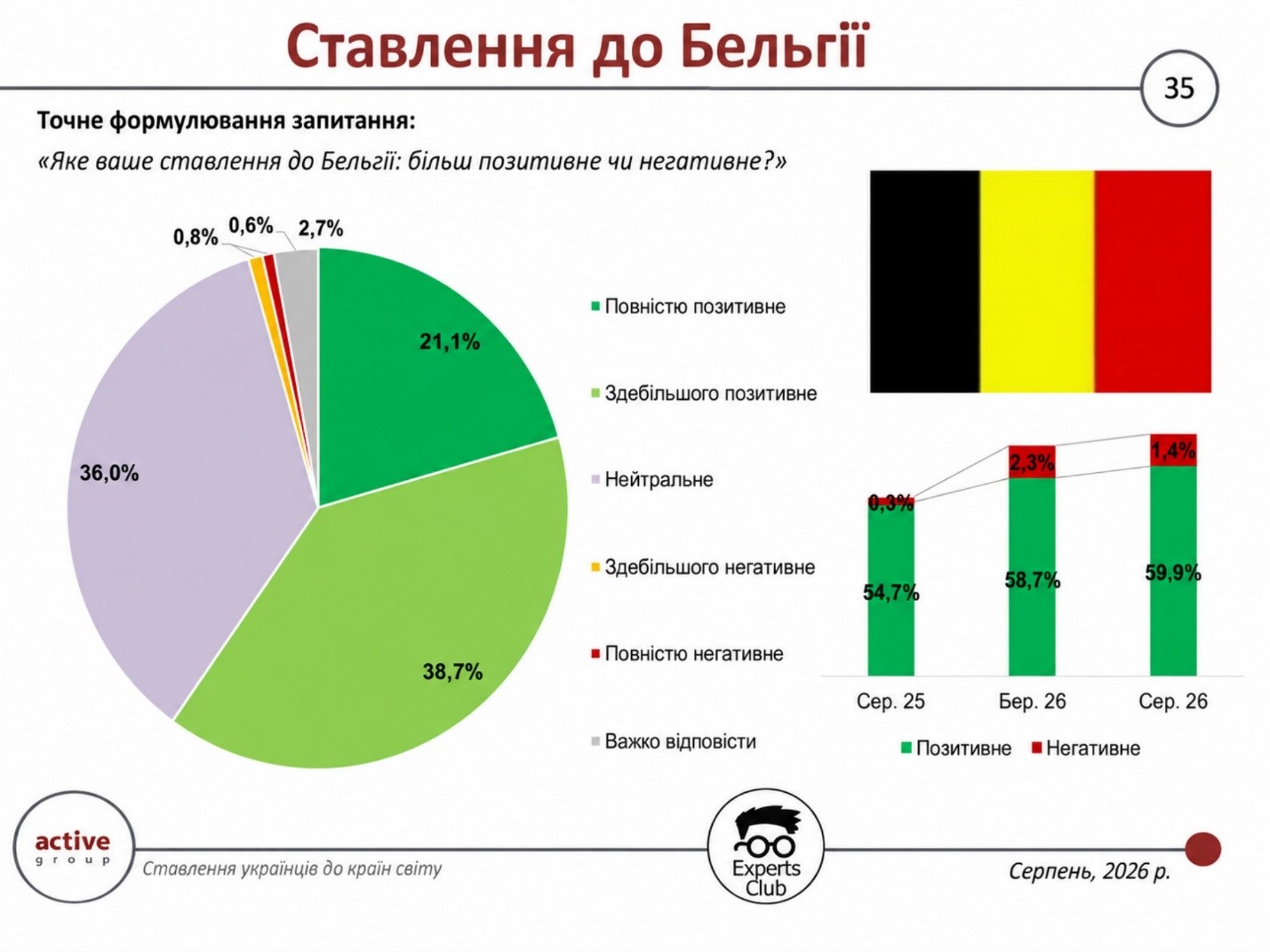
Thus, over the course of five months, the share of positive assessments rose by 1.1 percentage points—from 58.7% to 59.8%—while negative assessments fell by 0.9 percentage points—from 2.3% to 1.4%. The neutral segment also decreased by 1.1 percentage points. The balance between positive and negative attitudes rose from approximately plus 56.4 to plus 58.4 percentage points.
At the same time, the internal structure of positive responses changed slightly. The share of fully positive assessments increased from 19.3% to 21.1%, while the share of mostly positive assessments decreased from 39.4% to 38.7%. This means that the overall improvement was modest, but a portion of respondents began to view Belgium more unequivocally positively.
Oleksandr Pozniy, director of the research firm Active Group, previously noted that a significant proportion of neutral responses regarding Belgium is not linked to a negative perception but rather to the specific characteristics of the country’s established image.
“Belgium is perceived by Ukrainians as an important member of the European Union and NATO, a country that consistently supports Ukraine on the international stage. At the same time, its relative distance and the lack of deep historical ties account for the high proportion of neutral assessments,” Pozniy explained.
The new wave of the survey generally confirms this characterization. The positive segment is gradually expanding, negative assessments remain at a minimal level, yet more than a third of Ukrainians still hold a neutral position. This indicates significant potential for further shaping a more defined image of Belgium through economic, humanitarian, educational, and intercultural contacts.
The previous wave of the survey was conducted in March 2026 among 800 Ukrainian citizens aged 18 and older using self-administered online questionnaires on the SunFlowerSociology panel. The sample was representative by age, gender, and region; the maximum theoretical margin of error for indicators at the 50% confidence level was ±3.5 percentage points.
ACTIVE GROUP, BELGIUM, EUROPEAN UNION, EXPERTS CLUB, international relations, NATO, Pozniy, PUBLIC OPINION, SOCIOLOGY, UKRAINE

A neutral stance continues to dominate Ukrainians’ attitudes toward Egypt: in August 2026, 61.3% of respondents expressed this view. 28.1% of those surveyed view the country positively, while 6.9% view it negatively. Compared to March, the share of positive assessments has decreased, while the share of negative ones has increased, according to the Experts Club Information and Analytical Center.
According to the results of the August survey, 7.2% of Ukrainians have a completely positive attitude toward Egypt, while 20.9% have a mostly positive attitude. A neutral stance is held by 61.3% of respondents. 6.3% view the country mostly negatively, 0.6% view it entirely negatively, and another 3.7% were undecided.
The balance of positive and negative assessments based on these indicators is +21.2 percentage points. Thus, positive attitudes toward Egypt are roughly four times more prevalent than negative ones; however, the high proportion of neutral responses remains the defining characteristic of how the country is perceived.
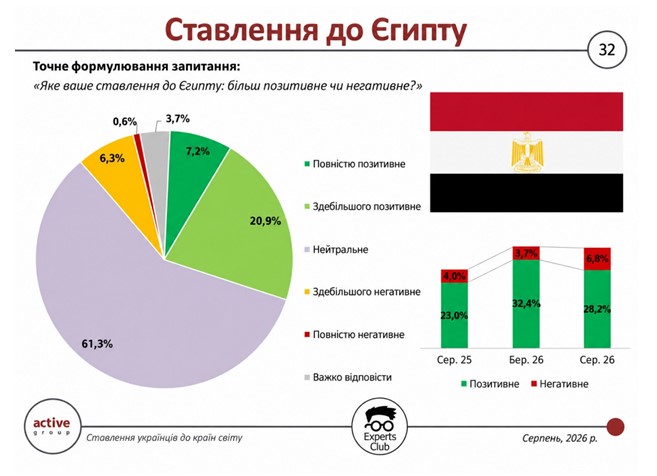
Compared to March 2026, attitudes have deteriorated slightly. In the previous survey wave, 10.5% of respondents rated Egypt entirely positively, and 21.9% rated it mostly positively—meaning the overall positive rating stood at 32.4%. 62.5% of respondents were neutral, and the share of negative ratings in the aggregated results was about 3.7%.
Thus, over the course of five months, the share of positive responses decreased by 4.3 percentage points—from 32.4% to 28.1%—while the share of negative responses increased by approximately 3.2 percentage points—to 6.9%. The share of neutral assessments changed only slightly—from 62.5% to 61.3%. The balance between positive and negative attitudes decreased from approximately plus 28.7 to plus 21.2 percentage points, respectively.
Maksym Urakin, founder of the Experts Club information and analytical center and a candidate of economic sciences, believes that the case of Egypt clearly illustrates the difference between a country’s economic importance to Ukraine and the extent of its presence in the public consciousness.
“Egypt is a very important export market for Ukraine, primarily for agricultural and food products. At the same time, for most Ukrainians, this country remains more of a tourist destination than an economic partner. That is precisely why we see such a high proportion of neutral assessments: economic ties are significant, but they are not always visible to the general public,” Urakin noted.
According to him, the positive trade balance with Egypt makes this market particularly important for Ukraine amid a general foreign trade deficit.
“When a country provides Ukraine with a significant trade surplus, it is no longer a secondary partner. Such markets must be viewed strategically—in terms of maintaining exports, expanding the range of goods supplied, and fostering long-term economic ties. In the case of Egypt, the potential for this is obvious, but public perception has simply not yet caught up with the country’s actual economic role,” Urakin added.
Thus, Egypt demonstrates a noticeable gap between its economic significance and public perception. Despite the fact that the country is one of Ukraine’s most profitable trading partners in terms of the trade balance, over 60% of Ukrainians continue to view it neutrally. This indicates limited awareness and low emotional engagement rather than a negative attitude.
The survey was conducted in August 2026 using self-administered online questionnaires in the SunFlowerSociology panel among 800 Ukrainian citizens aged 18 and older. The previous wave also included 800 respondents; the sample was representative by age, gender, and region, with a maximum theoretical margin of error of ±3.5 percentage points for indicators at the 50% confidence level.
ACTIVE GROUP, EGYPT, EXPERTS CLUB, FOREIGN TRADE, international relations, NORTH AFRICA, PUBLIC OPINION, SOCIOLOGY, UKRAINE, URAKIN



