

The volume of passenger car imports to Ukraine, including cargo-passenger vans and race cars (UKT ZED code 8703), amounted to $2.62 billion in January–July 2026, which is 17% less than the figure for the same period in 2025 ($3.16 billion).
According to statistics released by the State Customs Service of Ukraine, in July alone, passenger car imports fell by 27.2% compared to July of last year—to $443.2 million, which is also 5.3% less than in June 2026.
The top three suppliers of passenger cars to Ukraine over the first seven months have consistently been the United States, Germany, and Japan, whereas in the previous year they were Germany, the United States, and China. Specifically, car shipments from the U.S. fell by 3.2% to $508.3 million, those from Germany decreased by 26% to $416.2 million, and imports from Japan totaled $371.2 million, whereas last year, cars worth $407.7 million were imported from China.
Imports of passenger cars from other countries during this period totaled $1.33 billion—20.4% less than last year’s figure.
At the same time, over the seven-month period, Ukraine exported only $2 million worth of such vehicles, primarily to Georgia, the Czech Republic, and Kazakhstan, whereas last year, total exports to the UAE, the Czech Republic, and Poland amounted to $4.54 million.
Passenger cars accounted for 4.52% of Ukraine’s total imports of goods in January–July, compared to 6.89% during the same period last year; their share of total exports was 0.01% and 0.02%, respectively.
As previously reported, in 2025, passenger cars worth nearly $6.15 billion were imported into Ukraine, which is 40.2% more than in 2024. The top three exporters were the United States, Germany, and China. Car exports totaled $10.1 million (2.7 times less).
The significant increase in passenger car imports to Ukraine starting in the summer of 2025 was driven by news that VAT exemptions on electric vehicle imports would be abolished as of January 1, 2026; as a result, imports have declined significantly since the beginning of this year. However, starting in March, a slow but steady recovery of the passenger car market—including electric vehicles—began.

Bitcoin (BTC) saw its price surge sharply on Wednesday evening, rising to $69,700, gaining around $4,000 in a short space of time and reaching its highest level in roughly two months, according to the Fixygen website.
After reaching its intraday high, the leading cryptocurrency corrected to around $68,500–$68,700 but remained up about 6% over 24 hours. The intraday low was around $64,100.
The sharp move began after the US Department of the Treasury announced that it would at least double the volume of buyback operations involving long-term US government bonds, to $4 billion or more per transaction.
Following the news, the yield on 30-year US Treasuries fell by around 8 basis points to 5.20%, with a similar decline observed in 10-year securities. At the same time, the US dollar began to weaken, while demand for risk and safe-haven assets increased.
Initially, following the Treasury’s announcement, bitcoin rose to around $64,900, then broke above $65,000, after which the rally sharply accelerated. At its peak, the price reached $69,700.
The surge triggered large-scale liquidations of short positions in the cryptocurrency market. According to CoinGlass data cited by CoinDesk, approximately $1.3 billion worth of cryptocurrency derivatives positions were liquidated in just one hour, between 14:50 and 15:50 UTC, with more than half of the total involving bitcoin trading pairs. Ethereum liquidations amounted to around $430 million.
The gains spread across virtually the entire major cryptocurrency market. Ethereum rose by around 9%, XRP by more than 6%, and Solana by around 6%.
BTC’s technical movement provided an additional factor. Before the current surge, analysts had noted the formation of an “inverse head and shoulders” pattern on the daily chart. According to technical analyst Aksel Kibar, a sustained breakout above the area around $66,600 could open the way for a move toward $76,000.
At the same time, the rapid pace of the current rally increases the likelihood of short-term volatility: a significant part of the move was amplified by the forced closure of short positions, and after reaching $69,700, bitcoin had already retreated by more than $1,000.
Bitcoin is the world’s largest cryptocurrency by market capitalization. Its supply is algorithmically limited to 21 million coins, with around 20 million BTC currently in circulation. Cryptocurrency prices are characterized by heightened volatility and can change significantly within a short period.

US President Donald Trump has suggested that Greenland could come under Washington’s operational control before the end of his current presidential term.
Trump made this statement on 31 July in an interview with Steve Gruber, a presenter on the Real America’s Voice television channel. The journalist recalled his prediction that Greenland would come under US operational control before Trump leaves office, and asked whether the island remained of key importance for the defence of the Western Hemisphere.
“Yes, you’ll be right,” Trump replied, suggesting that the presenter “place that bet”.
The US President did not specify how Washington might gain control of the island, nor did he mention any new agreement with Denmark or the Greenlandic government. His remarks therefore remain, for the time being, a political statement rather than an announcement of an agreed plan or timetable for the transfer of the territory.
Back in July, Trump had already stated that Greenland should be under US control rather than Denmark’s. He explained his position by citing the island’s strategic location and the need to counter Russian and Chinese activity in the Arctic.
In response, Danish Prime Minister Mette Frederiksen stated that Greenland is not for sale and called on allies to respect the sovereignty and territorial integrity of the Kingdom of Denmark. The Greenlandic authorities also emphasise that the island’s future can only be determined by its inhabitants.
Greenland is a self-governing territory within the Kingdom of Denmark. It governs most domestic matters independently, whilst defence and a significant part of foreign policy remain under Copenhagen’s jurisdiction.
The US’s interest stems from Greenland’s location between North America and Europe, control over Arctic air and sea routes, a missile launch warning system, and potential deposits of rare-earth and other critically important minerals. The United States already operates the Pituffik Space Station on the island, formerly the Thule Air Base.
American interest in acquiring the island predates Trump by a long way. The US Congressional Research Service notes that the issue of a possible acquisition of Greenland was raised by Washington in 1868, 1910 and 1946.
The US came closest to exercising effective control over the island during the Second World War. Following Germany’s occupation of Denmark, the Danish ambassador to Washington, Henrik Kaufmann, signed a defence agreement with the US on 9 April 1941 concerning Greenland.
The document preserved Danish sovereignty but allowed the United States to build and safeguard military installations. In the established defence zones, the US was granted exclusive jurisdiction, with the exception of matters concerning Danish citizens and the indigenous population.
The US military built airfields, radio stations, meteorological stations and other infrastructure on the island. They ensured the defence of the territory and drove out the German units that had landed there.
It can therefore be said that during the war years, the US effectively controlled Greenland’s military security, key transport facilities and strategic areas. However, there was no full political control or American sovereignty over the entire island — formally, it continued to belong to Denmark.
After the war ended, Washington was reluctant to leave the island entirely. In December 1946, US Secretary of State James Byrnes proposed to the Danish leadership that they consider a direct sale of Greenland. The US military leadership considered the purchase of the island to be the preferred option, whilst long-term rights to station bases there were seen as an alternative. Copenhagen did not accept the proposal.
In 1951, the US and Denmark concluded a new defence agreement within the framework of NATO. It cemented the American military presence and allowed for the establishment of the Thule Defence Area. The base built there subsequently became a key element of the early warning system for missile attacks and space surveillance.
Thus, the US already has extensive military capabilities in Greenland without changing its state status. The US can use the agreed defence areas, station personnel and operate strategic infrastructure. According to the Experts Club information and analysis centre, the current debate concerns not so much access for the US military as Washington’s potential acquisition of political control or sovereignty over the island.
In 2019, during his first presidential term, Trump also proposed buying Greenland. Denmark and the island’s authorities rejected this proposal at the time. Upon his return to the White House, Trump has once again made establishing control over the island one of the key priorities of his Arctic policy.
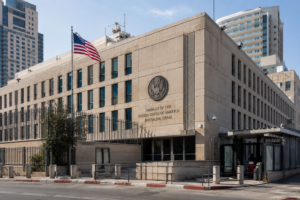
The US embassies in Israel and a number of other Middle Eastern countries have advised US citizens to consider leaving the region due to the risk of unforeseen escalation and possible disruptions to air travel.
“Due to heightened tensions in the Middle East, the security situation remains challenging, and the possibility of an unforeseen escalation persists,” according to warnings issued on 1 August by US diplomatic missions.
US citizens already in the region are advised to exercise increased caution and be prepared for flight cancellations, periodic airspace closures and other travel restrictions.
“Americans in the region should consider leaving or be prepared to leave in the event of an escalation,” the statement notes. Americans outside the Middle East are advised to seriously reconsider any plans to travel to or transit through the region.
Similar warnings have been issued by US embassies and diplomatic missions in Israel, Egypt, Jordan, Lebanon, Saudi Arabia, Qatar, Bahrain, Oman and Iraq. The diplomatic missions continue to provide routine consular and visa services.
The US Embassy in Jordan has additionally advised Americans to stay away from military bases in the country. The advisory also states that Iran and groups it supports may attack US interests and facilities abroad.
On 22 July, the US State Department issued a global travel advisory, urging Americans to exercise increased caution due to tensions in the Middle East. At that time, the department also warned of possible flight cancellations, airspace closures and disruptions at airports.
In other words, the US authorities have not ordered the mandatory evacuation of all citizens from Israel and other countries in the region. The advice is to make use of available commercial transport routes or to prepare an exit plan in advance in case the situation deteriorates further.
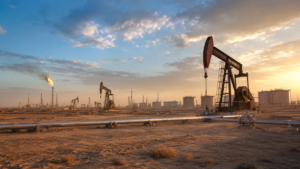
Iraq is forming a new package of cooperation with American energy companies that is expected to increase oil and gas production, accelerate the processing of associated gas, and attract private capital to modernize the country’s oil and gas infrastructure.
Iraq’s Oil Minister Basim Mohammed estimated the total value of agreements between the Iraqi oil ministry and U.S. companies at approximately $200 billion. According to him, the projects should significantly expand production capacity and increase investment in the use of associated gas. Iraq’s current oil production capacity is estimated at about 4.8 million barrels per day.
At the same time, the declared $200 billion should not be viewed exclusively as the volume of already financed projects. The package includes contracts, preliminary agreements, memorandums, technical studies, and potential investment programs, the final parameters of which will be determined following negotiations.
During the visit of Iraqi Prime Minister Ali Faleh al-Zaidi to the United States, the Iraqi delegation held talks with representatives of Halliburton, Shell, Honeywell, Weatherford, and Baker Hughes. The parties discussed the development of oil and gas fields, the introduction of modern technologies, and increasing the efficiency of the energy sector.
Separate talks were held with Chevron. Iraq proposed that the company expand its activities in the southern fields and participate in oil refining, petrochemical, and gas infrastructure projects.
Chevron, for its part, expressed interest in developing the southern fields, laying pipelines to regional ports, and creating oil storage facilities. Iraqi authorities stated their readiness to speed up the allocation of land plots, the issuance of permits, and the creation of the necessary infrastructure.
Halliburton received a contract from Basra Oil Company to provide integrated management services for the Bin Omar and Sindbad fields in southern Iraq. The agreement provides for integrated asset development management, as well as support for the design, procurement, and construction of infrastructure.
In fact, Iraq is seeking to move from separate service contracts to a long-term presence of American companies in production, processing, oilfield services, digital field management, and the construction of export infrastructure.
For Baghdad, American capital is important not only as a source of financing. Large U.S. companies can provide access to enhanced oil recovery technologies, modern drilling and compressor equipment, automation of production processes, and international project management standards.
An additional task is the diversification of export routes. Iraq is interested in developing pipelines, oil storage facilities, and new outlets to regional ports in order to reduce dependence on a limited number of supply routes.
What opportunities are opening up for Ukraine
The scale of Iraqi projects creates opportunities not only for American operators. A significant part of the work will be carried out by international EPC contractors, oilfield service companies, and equipment suppliers that form their own global procurement chains.
For Ukrainian companies, the most realistic path is not the independent development of oil fields, but participation in the projects as suppliers, engineering partners, and subcontractors of American operators.
One of the main areas could be pipe and metallurgical products. Field development and export infrastructure construction projects will require casing, tubing, and trunk pipelines, sheet metal products, tanks, metal structures, and elements of industrial buildings.
Ukrainian manufacturers could also supply pumping and compressor equipment, shut-off valves, electric motors, transformers, cable products, switchgear, and modular substations.
A separate niche is connected with the processing of associated gas. Iraq needs gas gathering networks, compressor stations, gas purification and treatment units, small power plants, and electricity transmission equipment. American agreements provide for increased investment specifically in gas projects.
Ukrainian engineering companies can participate in the design of pipelines, tank farms, compressor and pumping stations, industrial facilities, and power supply systems.
There are also prospects for the IT sector. This concerns the implementation of SCADA systems, automated oil and gas metering, digital field modeling, equipment condition monitoring, and industrial cybersecurity.
Another area could be the technical diagnostics of pipelines, protection of metal from corrosion, inspection of existing infrastructure, and preparation of projects for its modernization.
The development of the oil and gas sector will also create demand in related industries. The construction of industrial facilities will require cement, road materials, specialized machinery, mobile buildings, warehouse equipment, water supply systems, and transport logistics.
Additional opportunities may arise for Ukrainian food producers. Large projects are accompanied by the creation of workers’ settlements, logistics centers, and new service enterprises, which increases demand for flour, vegetable oil, poultry meat, cereals, and ready-made food products.
A trilateral model could be optimal, in which an American company acts as the operator or general contractor, a Ukrainian enterprise supplies equipment, materials, or engineering solutions, and an Iraqi partner provides registration, local logistics, and interaction with government agencies.
Working through American operators and international EPC contractors allows Ukrainian enterprises to obtain more transparent technical requirements, safety standards, and quality control procedures.
At the same time, Ukrainian companies will need to undergo supplier prequalification, confirm that their products comply with API, ASTM, or the requirements of a specific customer, prepare English-language technical documentation, and provide after-sales service for the equipment.
For a systematic entry into the market, it would be advisable to form a separate catalog of Ukrainian manufacturers of oil and gas and energy equipment. It should specify production capacities, international certificates, experience in export deliveries, and readiness to work through American general contractors.
The next stage could be a trilateral business mission Ukraine–USA–Iraq with the participation of manufacturers of pipes, energy equipment, engineering, and digital companies.
The most logical venues for such events are Baghdad, Basra, and Houston, where Iraqi customers, oilfield service companies, and the main decision-making centers of the American energy industry are concentrated.
Maxim Urakin, founder of the Experts Club information and analytical center, commenting on the structure of Ukraine’s foreign trade, noted the need to move to a more complex export model.
“Ukraine needs to increase not only the physical volume of supplies, but also the share of products with high added value,” Urakin emphasized.
In his opinion, in order to reduce the trade deficit, Ukraine needs to develop processing industries, machine-building, the food industry, and technological exports.
Applied to Iraq, such a strategy means a transition from predominantly traditional commodity supplies to the export of pipes, metal structures, equipment, software solutions, and engineering services.
Iraq is already a profitable market for Ukraine with a large positive trade balance. However, participation in energy and infrastructure projects would make the relationship more long-term and increase the share of industrial products in Ukrainian exports.
According to the Experts Club information and analytical center, in January–June 2026 Iraq ranked 53rd among Ukraine’s largest trading partners.
Trade turnover between the countries amounted to $151.123 million. Ukraine exported goods to Iraq worth $151.051 million, while imports of Iraqi products amounted to only $72 thousand.
The positive trade balance for Ukraine reached $150.979 million. Thus, virtually the entire bilateral trade turnover was formed by Ukrainian exports. The data are presented in the table accompanying the Experts Club analysis published on July 16, 2026.
For comparison, at the end of 2025, Ukraine’s trade turnover with Iraq was estimated at $392.836 million. Ukrainian exports amounted to $392.513 million, imports to $323 thousand, and the positive balance reached $392.190 million.
The trade figures confirm that Iraq remains a profitable sales market for Ukrainian companies. At the same time, the almost one-sided trade structure indicates a low level of mutual investment and industrial cooperation.
Iraq’s new agreements with the United States may become an opportunity to change this model. Even limited participation of Ukrainian enterprises in energy projects with a total declared value of up to $200 billion can significantly increase exports of high value-added products.
With the proper organization of trilateral cooperation, Iraq can gradually turn from a predominantly commodity market into a long-term industrial, energy, and infrastructure partner of Ukraine.
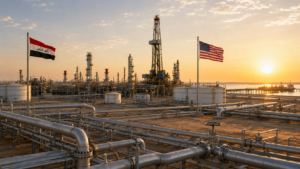
Iraq has estimated the total value of contracts and agreements concluded with American energy companies during Prime Minister Ali al-Zaidi’s July visit to the United States at approximately $200 billion.
Iraqi Oil Minister Basim Mohammed Khudair announced this on July 21. According to him, the projects are expected to increase the country’s production capacity, expand associated gas processing and bring American technologies into the oil and gas industry. The minister estimated Iraq’s current production capacity at 4.8 million barrels of oil per day.
The announced package includes seven key arrangements related to field development, oil and gas asset management, energy infrastructure modernisation and the search for new export routes.
At the same time, the $200 billion estimate does not yet mean that the entire amount has already been formalised as binding capital investment. The package includes contracts, framework agreements, memoranda and preliminary arrangements. The final volume of investment will depend on the results of technical studies, commercial negotiations, the agreement of financing terms and the receipt of regulatory approvals.
Chevron expands its presence in Iraq
The American company Chevron has become one of the central participants in the new energy cooperation.
The company is negotiating its participation in the operation of the West Qurna-2 field, one of Iraq’s largest oil assets, as well as the development of the Nasiriyah field. The parties previously signed preliminary documents concerning Nasiriyah, the Balad field and several exploration blocks in Dhi Qar Province.
During a meeting with Chevron’s management, the Iraqi prime minister called on the company to accelerate investment in oil and gas production and the construction of oil refineries, petrochemical plants, pipelines and storage facilities.
The Iraqi side stated that it was prepared to allocate land plots and expedite administrative approvals for major energy projects. Chevron, in turn, expressed interest in fields in the south of the country and in developing infrastructure for the storage and export of raw materials.
The agreements concerning West Qurna-2 and Nasiriyah remain predominantly preliminary. Before final contracts are concluded, Chevron must examine the projects’ geological, technical and commercial data.
Halliburton to manage the Bin Umar and Sindbad fields
The American oilfield services company Halliburton has received a contract from the state-owned Basra Oil Company for the comprehensive management of the development of the Bin Umar and Sindbad oil and gas fields in southern Iraq.
The contract provides for integrated field management services, as well as support for the design, procurement and construction of the necessary infrastructure.
The involvement of Halliburton is expected to help Iraq increase oil and gas recovery from existing assets, introduce modern reservoir management methods and reduce technological losses.
Another agreement has been concluded with the American company HKN Energy for the development of the Himrin field in the north of the country. The Iraqi government approved the project as part of a broader programme to attract American companies to the oil and gas and electric power sectors.
Iraq seeks alternative oil export routes
One of Baghdad’s strategic objectives is to reduce its dependence on routes through the Persian Gulf and the Strait of Hormuz.
Recent regional crises have demonstrated the vulnerability of Iraq, most of whose oil exports pass through southern terminals. Shipping restrictions and export disruptions have a direct impact on production, budget revenues and the state’s ability to finance infrastructure projects.
Iraq is considering expanding supplies through the Turkish port of Ceyhan and creating a route to the Mediterranean Sea through Syria. The Iraqi and Syrian sides previously discussed transporting oil to the port of Baniyas, including the possibility of restoring existing infrastructure or constructing a new pipeline system.
Chevron is also exploring the possibility of participating in export pipeline and storage projects. If implemented, they would connect the oil fields of southern and northern Iraq with alternative maritime terminals and reduce the country’s dependence on the Strait of Hormuz.
However, such projects will require interstate agreements, large-scale investment and security guarantees. The restoration of pipelines through Syria is complicated by the condition of the infrastructure and the need to ensure the protection of the route along its entire length.
Baghdad turns towards American capital
The current arrangements reflect a broader shift in Iraq’s energy policy towards the United States.
In recent years, Chinese companies have secured a significant share of the country’s new oil and gas projects. Major assets have also been managed by Russian and European operators.
Ali al-Zaidi’s government has announced its intention to give priority to reputable American companies in the energy, telecommunications and technology sectors. To facilitate their entry into the market, the authorities have begun reviewing certain administrative requirements and strengthening the security of oil facilities.
For Iraq, such cooperation is expected to provide access to investment, technologies, oilfield services equipment and political support from Washington. For American companies, the country is attractive because of its large oil reserves, underdeveloped gas sector and need to modernise its infrastructure.
Production growth constrained by OPEC+ agreements
Iraq intends to increase its oil production capacity, but actual production volumes depend on more than investment alone.
The country participates in OPEC+ agreements and is required to comply with the established restrictions. In July, the group’s countries again reaffirmed their commitment to the current arrangements, including the need to compensate for previously exceeding production quotas.
The Iraqi Ministry of Oil previously announced plans to increase production capacity to more than 6 million barrels per day by 2028–2029. Achieving this goal will require the development of new fields, the rehabilitation of existing assets, the expansion of export infrastructure and agreement on a higher quota within OPEC+.
The development of the gas industry remains a separate priority. Iraq is seeking to expand the processing of associated gas, which continues to be flared at fields, and reduce the electric power sector’s dependence on imported fuel.
The authorities plan to increase the utilisation of produced gas to the highest possible level and virtually eliminate its flaring by the end of the decade.
Implementation of agreements will take several years
The package of projects with American companies could become one of the largest investment shifts in the history of Iraq’s oil and gas industry.
However, a significant share of the arrangements remains at a preliminary stage. To proceed to full implementation, the parties must determine the commercial terms, allocation of risks, investment payback periods and security guarantees.
OPEC+ quotas, bureaucratic procedures, the condition of pipeline infrastructure and regional instability remain additional constraints.
If even part of the announced projects is implemented, Iraq will be able to increase oil and gas production, expand processing, reduce its dependence on a single export route and strengthen its position as one of the largest energy producers in the Middle East.
ENERGY, INVESTMENT, IRAQ, OIL, USA



