
According to Experts Club, Egypt has the highest level of positive sentiment among Ukrainians among the North African countries included in the study: 28.2% of respondents view it positively, and the net positive rating stands at 21.4 percentage points. At the same time, neutral assessments dominate perceptions of all four countries in the region—their share ranges from 59.3% to 67.3%. This is evidenced by the results of the third wave of the study “Ukrainians’ Attitudes Toward Countries Around the World,” conducted by Active Group in collaboration with Experts Club, reports the Experts Club Information and Analytical Center.
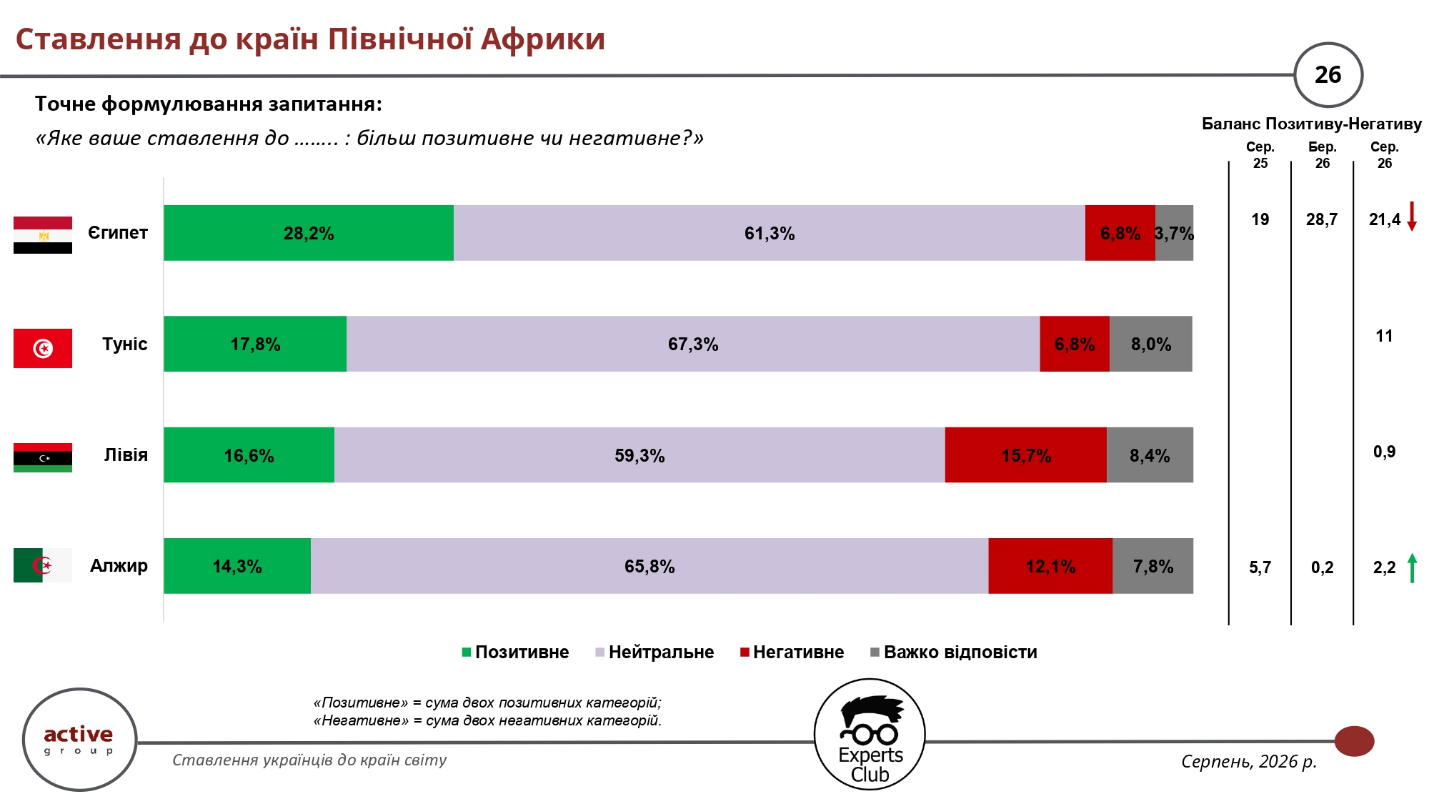
28.2% of Ukrainians surveyed view Egypt positively, 61.3% neutrally, 6.8% negatively, and another 3.7% were undecided. The balance of positive and negative assessments in August 2026 stood at 21.4 percentage points, compared to 28.7 percentage points in March and 19 percentage points in August 2025. Thus, following a spring increase, the indicator has declined but remains slightly higher than it was a year ago.
Neutral attitudes toward Tunisia predominate—67.3% of respondents expressed this view. 17.8% view the country positively, 6.8% negatively, and another 8% were undecided. The balance stands at plus 11 percentage points, placing Tunisia in second place among the North African countries surveyed.
In Libya, positive and negative assessments are virtually equal: 16.6% of respondents view the country positively, 15.7% negatively, and 59.3% neutrally. Accordingly, the balance is only +0.9 percentage points.
For Algeria, the share of positive assessments is 14.3%, negative—12.1%, neutral—65.8%, and another 7.8% of respondents were undecided. The balance stands at plus 2.2 percentage points. In March 2026, it was only plus 0.2 percentage points, and in August 2025, it was plus 5.7 percentage points.
Thus, none of the North African countries surveyed has a negative sentiment balance; however, the high proportion of neutral responses indicates that Ukrainians’ attitudes toward these countries are significantly less well-defined compared, for example, with their attitudes toward European countries. At the same time, Egypt and Algeria are also economically important to Ukraine: according to data presented at the press conference, in the first half of 2026, Ukraine’s trade surplus with Egypt amounted to $527.1 million, and with Algeria—$309.2 million.
Maksym Urakin, founder of the Experts Club Information and Analytical Center, deputy director of the Interfax-Ukraine news agency, and candidate of economic sciences, emphasized the need for partner countries to communicate more actively with the Ukrainian audience.
“The first recommendation is to regularly highlight specific projects, concrete actions, and the presence here of foundations, embassies, teams, and diplomats in the humanitarian sphere and in science. Second, to be open to questions and inquiries from the media and the public,” Urakin noted. According to him, it is also advisable to use sociological survey results to strengthen bilateral relations, particularly in the trade sector.
The survey was conducted in August 2026 using self-administered online questionnaires in the SunFlowerSociology panel among 800 Ukrainian citizens aged 18 and older. According to the organizers, the sample is representative in terms of age, gender, and region, with a maximum theoretical margin of error of ±3.5 percentage points. This is the third wave of the study, following surveys conducted in August 2025 and March 2026.
ACTIVE GROUP, ALGERIA, EGYPT, EXPERTS CLUB, international relations, LIBYA, NORTH AFRICA, SOCIOLOGY, TUNISIA, UKRAINE
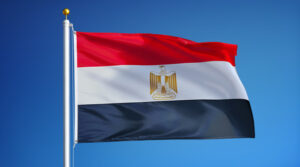
Ukraine maintains a significant positive trade balance with a number of key partners, which partially offsets the deficit in relations with China and EU countries.
The largest surplus in the first half of 2025 was recorded in trade with Egypt — $605.0 million. Spain ranks second with a balance of $515.3 million, followed by the Republic of Moldova — $448.4 million. Positive dynamics are also observed in relations with the Netherlands ($357.6 million), Algeria ($276.6 million), and Lebanon ($243.8 million).
Ukraine also has a high trade surplus with Iraq ($189.0 million), Libya ($133.6 million), Saudi Arabia ($128.4 million), and Kazakhstan ($113.6 million).
“The positive trade balance indicates that Ukraine is capable of competing effectively in international markets, especially in the agricultural sector and metallurgy. At the same time, it should be borne in mind that these markets are vulnerable to changes in the global economic situation, price fluctuations, and political factors,” emphasized Maksim Urakin, founder of Experts Club and economist.
According to him, maintaining a positive balance in relations with the countries of the Middle East and North Africa is a key element of Ukraine’s foreign trade strategy.
“Egypt, Spain, and the countries of the Arab world are stable importers of Ukrainian agricultural products. This is a strategic direction that needs to be developed further, as it creates a safety cushion for the economy against the backdrop of significant import costs,” Urakyn emphasized.
Analysts note that consolidating positions in the African and Middle Eastern markets could become a long-term factor in strengthening Ukraine’s foreign economic balance.
Agricultural exports, ALGERIA, ECONOMY, EGYPT, EXPERTS CLUB, FOREIGN TRADE, IRAQ, KAZAKHSTAN, LEBANON, LIBYA, MOLDOVA, NETHERLANDS, positive balance, SAUDI ARABIA, SPAIN, UKRAINE, МАКСИМ УРАКИН
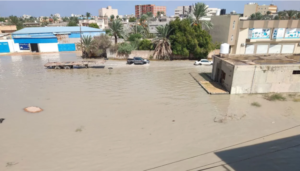
The number of dead as a result of flooding in Libya caused by Hurricane Danielle has exceeded 8 thousand people, more than 10 thousand residents are missing, Al Arabia reports.
“The death toll from the natural disaster in northeastern Libya has exceeded 8 thousand people. The number of missing people now exceeds 10 thousand,” a Libyan parliamentary advisor said in a statement.
Abdulmenam al-Ghaite, head of the municipality of the city of Derna, which has taken the brunt of the flooding, said it was predicted that the death toll from heavy rains and flooding could rise to 20,000.
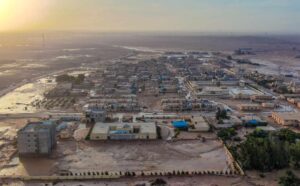
The number of people who died as a result of flooding caused by Hurricane Danielle, which raged in the Central Mediterranean in eastern Libya, exceeds 2 thousand people, reports TRT Haber TV channel on the night of September 12.
It is emphasized that as a result of the natural disaster that swept the east of the country, more than 2 thousand people were killed and almost 7 thousand people are missing. The cities of Al-Baida, Sousse, Al-Marj and Derna were flooded. A curfew has been imposed in areas where a state of emergency has been declared.
Libya’s Prime Minister called on the international community to provide aid to flood-affected areas. Three days of mourning have been declared in the country.

IAEA inspectors found that about 2.5 tons of unenriched uranium stored at a site in Sebha, 660 kilometers southeast of the Libyan capital Tripoli, has disappeared, the Associated Press (AP) reported Thursday, citing the agency.
“Security inspectors found last Tuesday that 10 barrels containing approximately 2.5 tons of natural uranium in the form of uranium ore concentrate were no longer at the declared site in Libya. The agency will take action to clarify the circumstances surrounding the removal of nuclear material from the site,” the AP cited excerpts from an IAEA statement.
The day before IAEA Director General Raphael Grossi informed member countries about the situation in Libya.
According to AP, each ton of these substances, given the appropriate technology, can be processed into 5.6 kilograms of weapons-grade material needed to build an atomic bomb.
Since the overthrow and assassination of Libyan leader Moammar Gadhafi in 2011, Sebha has been in a state of powerlessness, with an illegal migration route through the city and, according to the UN, cases of slave trade recorded in Sebha. In recent years, the city has been largely controlled by the Libyan National Army of Field Marshal Khalifa Haftar, with rebels from neighboring Chad also present.
Altogether, according to various estimates, Libyan authorities accumulated about 1,000 tons of uranium concentrate during the Gadhafi rule (1969 – 2011). In 2003, after the U.S. invasion of Iraq, he disclosed to the international community the workings of Libya’s nuclear program, and in 2009 international inspectors removed the last stocks of enriched uranium from the country. However, according to the UN, in 2013 Sebha stored about 6,400 barrels of uranium concentrate.
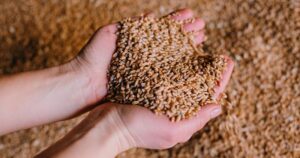
Ports of “Big Odessa” on Thursday sent 221 thousand tons of agricultural products in the framework of the “Grain Initiative”, said the Ministry of Infrastructure of Ukraine.
“Today a caravan of five ships left the ports of “Big Odessa”, which will deliver 221 thousand tons of agricultural products to Africa, Asia and Europe, including the bulk carrier Sea Bridle with 25 thousand tons of agricultural products for Libya,” the Ministry noted.
According to him, since the beginning of the grain corridor 12 ships with 305 thousand tons of Ukrainian grain to this African country.
The Ministry noted that there are 29 vessels in the ports, involved in the “grain initiative”. More than 1 million tons of Ukrainian agricultural products are loaded on them.
“Grain corridor” is also moving two vessels for the loading of 89 thousand tons of agricultural products.
At the same time in the Bosporus 92 vessels are waiting for their turn to be inspected by the SCS. Over the past day, seven ships received approval for further movement after the inspection.
According to the information of the Ministry of Infrastructure, at least 12 inspections per day are required for continuous movement through the grain corridor.
A total of 574 vessels have left the ports of Greater Odessa since August 1, which exported 14.6 million tons of Ukrainian food to Asia, Europe and Africa.



