

The overall level of illicit tobacco trade in Ukraine rose to 19.8% in April 2026 from 17.6% at the beginning of the year, according to the results of the second wave of the project “Monitoring Illicit Tobacco Trade in Ukraine,” conducted by Kantar Ukraine on behalf of leading manufacturers in the industry.
According to data published on its website, nearly one in five packs of cigarettes on the Ukrainian market is illegal. Analysts estimate that, given this level of the black market, annual losses to the state budget due to unpaid taxes amount to 33.3 billion UAH.
“The main factor driving this growth was an increase in the volume of counterfeit products, particularly cigarettes with forged excise stamps. At the same time, the volume of products labeled ‘Duty Free’ or intended for export but illegally sold in Ukraine has remained stable since the beginning of the year, although it exceeds the figures for 2025,” the study notes.
According to the study’s findings, 38% of the total volume of counterfeit products consists of cigarettes from local manufacturers with counterfeit excise stamps. The main producer of such products, based on the labeling on the packaging, remains Marshall Finest Tobacco (United Tobacco)/VK Tobacco FZE.
In the segment of products labeled “Duty Free” or intended for export but illegally sold in Ukraine, 55% of cigarettes are produced by the Vynnykivska Tobacco Factory, and another 44% by Marshall Finest Tobacco.
Geographically, 68% of the total volume of illegal tobacco products is concentrated in seven regions of Ukraine: Dnipropetrovsk (18%), Odesa (11%), Kharkiv (10%), Kirovohrad (8%), Lviv (8%), Khmelnytskyi (7%) regions, and Kyiv and the Kyiv region (6%).
“The tobacco shadow has grown again(((. For the attention of the updated BEB,” commented Danylo Getmantsev, head of the Committee on Finance, Tax, and Customs Policy, on these results.
According to the study, despite a certain decline in sales of illegal cigarettes through kiosks, it is precisely kiosks and stores that remain the main distribution channels through which about two-thirds of illegal tobacco products are sold.
Kantar Ukraine conducts the “Monitoring of Illegal Trade in Tobacco Products in Ukraine” project on an ongoing basis. The study is based on the collection and analysis of empty cigarette packs, as well as interviews with smokers, to determine the channels of supply and the origin of illegal goods on the domestic market.
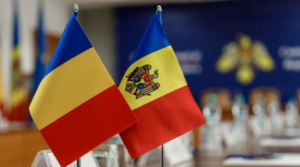
The bill on the unification of Romania and Moldova automatically passed the Chamber of Deputies of the Romanian Parliament after the deadline for consideration expired without debate or a final vote; however, the initiative received negative opinions from the government and relevant committees and must now be considered by the Senate.
The bill was introduced by deputies from the far-right S.O.S. România party. According to procedure, if the lower house does not consider an initiative within the established timeframe, it is deemed to have been tacitly adopted and is forwarded to the next chamber of parliament. In this case, the final decision must be made by the Romanian Senate.
The mere fact that the bill passed the Chamber of Deputies does not mean that the unification of Romania and Moldova has received political support from the majority. On the contrary, the initiative has already been met with negative assessments from the Romanian government, the Chamber of Deputies’ Legal Committee, and its Human Rights Committee.
The bill is primarily of a political and symbolic nature. The topic of the unification of Romania and Moldova regularly comes up in public discourse; however, Chisinau’s official position today is focused not on immediate unification but on Moldova’s accession to the European Union. Moldovan President Maia Sandu has previously stated that she would personally support unification in a referendum, but she also acknowledged that the majority of Moldovan citizens do not currently support such a scenario, and that European integration remains a more realistic goal.
For Romania, the issue of unification is also a sensitive one. On the one hand, Bucharest remains Chisinau’s main European partner, providing Moldova with political, economic, and infrastructure support, and a significant portion of Moldova’s citizens already hold Romanian citizenship. On the other hand, formal unification would raise issues regarding borders, security, the budget, the status of Transnistria, and relations with the EU, NATO, and Russia.
In theory, the potential of such a union for the region would be significant. It could accelerate Moldova’s institutional integration into the European space, expand the common labor market, strengthen transportation and energy links between the Black Sea, the Danube, and Eastern Europe, and bolster security on the eastern flank of the EU and NATO.
Economically, the union could provide Moldova with faster access to the infrastructure, financial instruments, and administrative system of an EU member state. For Romania, this would mean expanding its domestic market, deepening its influence in the region, and strengthening Bucharest’s role as a key partner of Chisinau.
However, the practical implementation of such a scenario remains extremely challenging. The main constraints are the lack of a stable majority in Moldova in favor of integration, the risks of internal polarization, the unresolved issue of Transnistria, Russia’s potential reaction, and the need to coordinate such a process with European and Euro-Atlantic partners.
Therefore, at this stage, the bill should be viewed more as a political signal and an element of intra-parliamentary struggle in Romania rather than as the beginning of an actual unification process. A more likely scenario for the region remains the gradual rapprochement between Romania and Moldova through infrastructure projects, energy integration, trade, citizenship, education, and support for Moldova’s European integration.

JSC “Ukrzaliznytsia” expects to post a net loss of 21.9 billion hryvnia and a liquidity shortfall of 26.3 billion hryvnia for 2026, assuming no fare indexation, said the company’s CEO, Oleksandr Pertsovskyi, during a press conference on Tuesday, according to a correspondent for the “Interfax-Ukraine” news agency.
According to him, among the main reasons for the deterioration in financial performance are a 2.4-fold increase in the cost of electricity, which led to additional expenses of 15.4 billion hryvnia; the need to index wages—13.4 billion hryvnia; a decline in revenue from freight transportation—7 billion hryvnia—due to hostilities and the occupation of parts of the territory; an increase in exchange rate losses from the revaluation of liabilities amounting to 3.8 billion hryvnia; and a 28% rise in diesel fuel prices, which cost the company an additional 2.1 billion hryvnia.
According to the company’s estimates, due to the suspension of fare indexation, the shortfall in cash receipts for the period from 2023 through the first three months of 2026 amounts to 99.5 billion UAH.
To cover this financial shortfall, Ukrzaliznytsia is implementing additional optimization measures for 2026, which will allow it to raise 1 billion UAH from the sale of non-core and surplus assets and 2.3 billion UAH in loans from international financial institutions, provided that fare indexation takes place.
Other measures include optimizing CAPEX, through which the company plans to accumulate 6.9 billion UAH by addressing the underfunding of critical capital investment needs. At the same time, internal funds for financing CAPEX in 2026 will amount to approximately 16.1 billion UAH.
A government decision is also required to resume, effective July 1, 2026, the sale of electricity to Ukrzaliznytsia through specialized auctions, with the introduction of a corresponding discount from the weighted average market price of electricity.
Other factors include a plan to increase suburban rail fares by 100%, though this requires approval from regional military administrations.
Among the proposed measures to stabilize Ukrzaliznytsia’s financial situation, the company also proposes raising freight rates by 30% effective August 1, 2026. The first phase involves an immediate rate increase and the standardization of rates for empty railcars.
Pertsovskyi emphasized that June is a critical period for making a decision on revising tariffs, as the regulatory procedure takes about two months.
“This is the last chance to make a decision before August, and by August we’ll simply be heading straight into the red at this pace. We still have a guaranteed debt payment due in August,” added the chairman of the board.
According to Pertsovskyi, a second phase could involve a further tariff adjustment of up to 15% starting in January 2027, though no such decision has been made yet.
As noted in the draft order, the need to adjust tariffs stems from the deteriorating financial condition of JSC “Ukrzaliznytsia,” whose revenues are insufficient to cover current expenses. The ministry noted that the last tariff adjustment took place nearly four years ago, while between July 2022 and April 2026, the industrial producer price index rose by 252.1%.
According to the Ministry of Development, in 2025, freight volumes decreased by 12.5% compared to the previous year, and Ukrzaliznytsia’s net loss amounted to 7.6 billion UAH. In the first four months of 2026, the loss reached 9.3 billion UAH.
At that time, the ministry noted that without tariff indexation, the company’s projected net loss for 2026 would exceed 13 billion hryvnia, and the funding shortfall would reach over 26 billion hryvnia.
Among other things, in January of this year, Ukrzaliznytsia refused to make $45 million in coupon payments on its 2026 Eurobonds with an 8.25% coupon rate totaling $703.2 million and on its 2028 Eurobonds with a 7.875% coupon rate totaling $351.9 million, and announced its intention to begin a comprehensive restructuring of its bond obligations with the assistance of financial and legal advisors.
The company cited the ongoing decline in revenue from freight transportation amid a decrease in freight volumes, as well as an increase in attacks on the railway—the total number of which in 2025 (1,195) exceeded the combined total for 2023–2024—as the main reasons for suspending debt service on the Eurobonds.
FARE, FREIGHT TRANSPORTATION, liquidity, LOSS, UKRZALIZNYTSIA
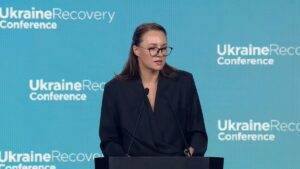
Prime Minister Yulia Sviridenko states that at the Ukraine Recovery Conference (URC 2026) in Gdańsk, Ukraine expects to sign 160 agreements worth over EUR10 billion.
“We expect 160 agreements worth more than EUR10 billion, which will mobilize resources across five areas: integration into Europe, human capital, business, regional and local development, and, for the first time, defense,” Sviridenko said at the opening of the Ukraine Recovery Conference (URC 2026) in Gdańsk on Thursday.
She also thanked partners for a EUR3.2 billion tranche, which will be disbursed on Thursday, enabling Ukraine to strengthen its defense, ensure macroeconomic stability, and prepare for the new heating season.
Later, Sviridenko reported on her Telegram channel that more than 80 Ukrainian companies are expected to participate in the largest URC business fair in history, alongside 2,000 business representatives from around the world.
A new format of the “Energy Platform” will also be launched, which will serve as a permanent tool for mobilizing international support for Ukraine’s energy sector.
“In my opening remarks, I noted that our main priorities are security, energy resilience, private-sector development, and attracting investment. Because Ukraine’s recovery is not just about rebuilding what has been destroyed—it is an investment in a strong Europe. That is precisely why strengthening Ukraine’s defense industry is a priority. Today, our defense industry is developing modern military technologies that have proven their effectiveness on the battlefield and are already contributing to the strengthening of European security,” she wrote.
As reported, the first tranche of EUR 3.2 billion from the European Union’s EUR 90 billion Ukraine Support Loan (USL) will be disbursed on Thursday, June 25, the opening day of the Ukraine Recovery Conference (URC 2026) in Gdańsk, Poland, according to European Commissioner for Enlargement Marta Kos.
The Ministry of Community and Territorial Development plans to sign agreements totaling more than EUR1.5 billion at the Ukraine Recovery Conference, covering areas of recovery in housing policy, infrastructure, and the country’s recovery through a regional approach.
The Norwegian government has proposed tightening the conditions for obtaining citizenship by changing the requirements regarding length of residence in the country and knowledge of the Norwegian language for certain categories of applicants.
Under the government’s initiative, applicants will be required to have lived in the country continuously for eight years to obtain a Norwegian passport. Currently, most applicants must have resided in Norway for a total of eight years over the past 11 years, provided they hold a permanent residence permit. The new model is intended to simplify the calculation of residency periods and reduce the number of different requirements for specific groups of applicants.
Norway’s Minister of Labor and Social Integration, Kjersti Stenseng, stated that obtaining citizenship should be viewed as a privilege, and that the current rules are too complex, particularly regarding residency requirements.
Separately, the government proposes to increase the residency requirement for stateless persons from three to seven years. For applicants in this category who were born in Norway or arrived in the country before the age of 18, the plan is to set a residency requirement of five years.
The changes will also affect foreigners who are married to, in a registered partnership with, or in a de facto relationship with a Norwegian citizen. For them, the period required to obtain citizenship is proposed to be increased from a minimum of five years of residence and marriage to six years of continuous residence in the country.
In addition, the government wants to raise the Norwegian language proficiency requirements for stateless persons aged 18 to 67—from level A2 to B1. Residence on the Svalbard archipelago will no longer be considered grounds for applying for Norwegian citizenship.
The government explains the changes as necessary to make the rules more consistent and understandable, as well as to speed up the processing of applications. At the same time, the stricter requirements effectively make the path to a Norwegian passport longer for a number of categories of foreign nationals.
In total, as of early 2026, there were 987,120 immigrants in Norway, accounting for 17.5% of the country’s population. Another 238,507 people were born in Norway to immigrant families, accounting for 4.2% of the population. Collectively, people of immigrant origin make up more than one-fifth of the country’s population.
The largest group of immigrants in Norway remains those from Poland—111,740 thousand people. Next are Ukraine—85,461 thousand, Lithuania—43,065 thousand, Syria—42,040 thousand, Sweden—37,732 thousand, Germany—28,145 thousand, Somalia—27,769 thousand, Eritrea—25,819 thousand, the Philippines—25,673 thousand, and Pakistan—24,821 thousand people.
The structure of immigration to Norway reflects a combination of several waves: labor migration from EU countries and Eastern Europe, refugee migration from Syria, Somalia, Eritrea, and Ukraine, as well as long-standing diaspora communities from Pakistan, Iraq, Turkey, and other countries. Ukrainian migration is characterized by rapid growth over a short period and a high proportion of women and children among those who arrived after 2022.
Norway remains one of the countries with the most powerful passports in the world. According to the Henley Passport Index, the Norwegian passport is among the most prestigious and grants visa-free or simplified entry to over 180 countries. Since 2020, Norway has allowed dual citizenship.
The Cabinet of Ministers of Ukraine has authorized that, for the duration of martial law and for 12 months following its end, timber harvested during sanitary logging be counted toward timber harvesting limits for main-use logging in mature and overmature stands in all forests, except for mountain forests in the Carpathian region, the press service of the Ministry of Economy, Environment, and Agriculture reported on Thursday.
“The adopted resolution will allow for more efficient use of forest resources under martial law and ensure additional volumes of timber to meet the needs of the economy, communities, and the defense sector. The document strengthens requirements for forest management, biodiversity conservation, and forest restoration. ‘We are establishing clear rules for forest users while ensuring a balance between the state’s economic needs and environmental responsibility,’ the press service quoted Taras Vysotsky, Deputy Minister of Economy, Environment, and Agriculture, as saying.
According to the statement, this decision will allow forest users to further meet the timber needs of the economy, the population, and the Armed Forces of Ukraine, while enabling state-owned forestry enterprises to increase the supply of marketable timber to the market.
At the same time, if the application of the new mechanism leads to a reduction of 30% or more in the main-use logging quota in mature and overmature stands, a mandatory recalculation of the quotas with a corresponding reduction is provided for. After logging, the forests will be subject to mandatory restoration in accordance with legal requirements.
In addition, the resolution clarifies the requirements for conducting sanitary measures and addressing the consequences of hostilities in forests, defines the specifics of certain types of logging, and introduces a mechanism for correcting technical errors in electronic logging permits.



