
Canada ranked first in terms of the balance of positive and negative attitudes among Ukrainians among Ukraine’s 50 largest trading partners, while China, which leads in trade turnover, received the lowest indicator, and attitudes toward Poland deteriorated significantly, according to the results of a study by Active Group and the Experts Club information and analytical center.
According to the published ranking, the balance of positive and negative assessments of Canada amounted to plus 73.8 percentage points. It was followed by Sweden – plus 70.6 p.p., the Netherlands – 69.7 p.p., Finland and Norway – 69.3 p.p. each, France – 69.1 p.p., Italy – 67.1 p.p., Lithuania – 65.9 p.p., Switzerland and the United Kingdom – 65.6 p.p. each.
This indicator is the difference between the shares of positive and negative responses. In particular, 76.3% of respondents have a positive attitude toward Canada, 2.5% have a negative attitude, and 19.2% have a neutral attitude.
The worst balance was recorded for China – minus 25.4 p.p.: 18.2% of respondents assess it positively, 43.6% negatively, and 33.9% neutrally. India also has a negative indicator – minus 14.3 p.p., Hungary – minus 12.7 p.p., and Lebanon – minus 9.2 p.p.
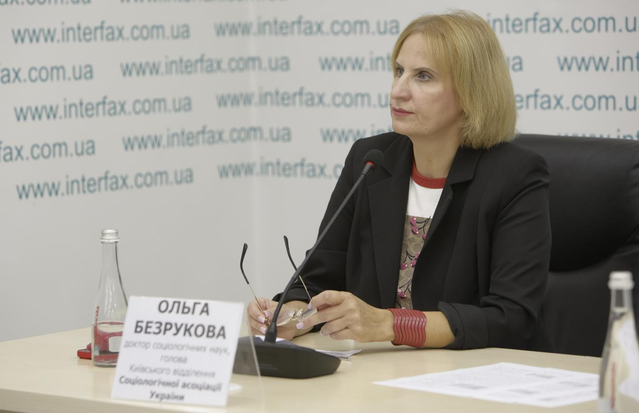
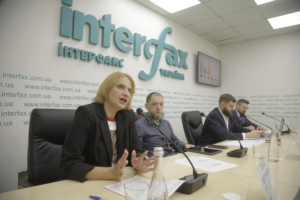
Doctor of Sociological Sciences and head of the Kyiv branch of the Sociological Association of Ukraine Olga Bezrukova called China an illustrative example of the gap between the scale of economic interaction and the country’s public image.
“We saw that China is Ukraine’s largest economic partner in terms of total trade turnover, but this is in no way converted into a positive public image. This shows that Ukrainian citizens clearly distinguish between the pragmatism of economic interaction and the overall assessment of a state. Economic dependence and interaction do not equal public sympathy for this country,” she emphasized at a press conference at the Interfax-Ukraine agency on Tuesday.
One of the most noticeable changes was the deterioration in attitudes toward Poland. While in March 2026 the balance of assessments stood at plus 41.7 p.p., in August positive and negative responses were practically equal, with a slight predominance of negative ones. A positive attitude was expressed by 34.6% of respondents, a negative one by 37%, and a neutral one by 25.4%.
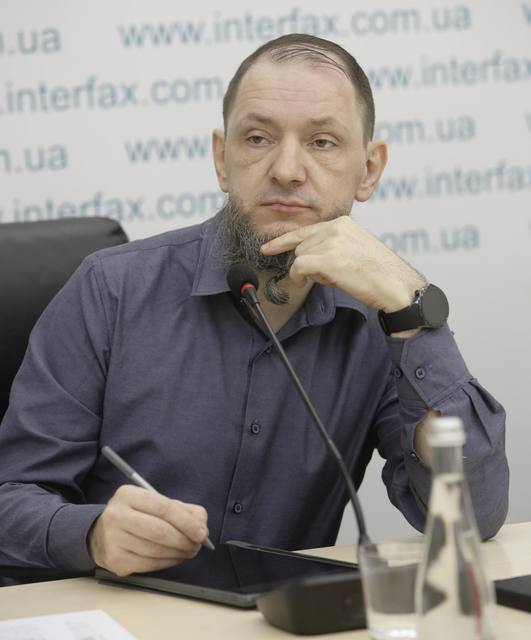
“At the beginning of the invasion, Poland was perceived almost as the main partner. We asked about the rapprochement between Ukraine and Poland, political and economic, even about uniting into some kind of common union, and we saw enormous positive results. But here we see: Poland seemingly still remains a key partner, but the idea of unification has already been forgotten, and we see stable negativity,” said Active Group founder Andriy Yeremenko.
He linked the deterioration in assessments to the position of part of the Polish authorities, which he considers anti-Ukrainian.
At the same time, the balance of attitudes toward Hungary improved from minus 33.6 p.p. in March to minus 12.7 p.p. in August, although negative assessments still prevail. For the United States, the indicator rose from plus 19.4 to plus 38.4 p.p. Some 55% of respondents have a positive attitude toward the United States, 16.6% a negative attitude, and 25.6% a neutral attitude.
When asked who contributes most to achieving peace in Ukraine, 44.6% of respondents named European Union countries, 25.2% the United States, 23.3% the United Kingdom, 4.1% China, 1.8% India, and 1% Brazil. Regarding priority development of trade and economic relations, 69.9% chose EU countries and the United Kingdom, 11.9% the United States, and 8.4% China.

According to Bezrukova, assessments of the U.S. role in achieving peace remained relatively stable throughout the three waves of the study.
“General sympathy toward a country and an assessment of its functionality at the international level are related but not identical things. Images of countries are multidimensional. A person may change their emotional attitude toward a state but continue to recognize its international weight,” the sociologist explained.
Another model, she said, is demonstrated by India: 48.3% of respondents express a neutral attitude toward it, but among formed assessments negative ones prevail – 31.5% versus 17.2% positive.
The economic indicators were presented by Experts Club founder, deputy director of the Interfax-Ukraine agency and PhD in Economics Maksym Urakin. According to State Customs Service data cited by him, in the first half of 2026 Ukraine’s trade turnover amounted to $70.3 billion, exports to $21 billion, and imports to $49.3 billion. The negative balance of trade in goods reached $28.3 billion.
“If we compare this with the first half of 2025, there was also an imbalance then, but now exports have increased by approximately 5%, while imports have risen by almost 30%. That is, the deficit increased by more than $10 billion over the year. Therefore, it is very important for us to analyze our main partners,” he emphasized.
According to the materials presented, trade turnover with China in January-June amounted to about $14.68 billion. Ukraine exported $778 million worth of goods to China and imported $13.90 billion, forming a deficit of approximately $13.12 billion. Poland remained the largest buyer of Ukrainian goods, with a volume of $2.38 billion. Türkiye ranked second among export markets with $1.78 billion, and Italy third with $1.28 billion.
In terms of total trade volume, China is followed by Poland – $7.05 billion, Türkiye – $4.90 billion, Germany – $4.48 billion, and the United States – $3.07 billion. Yeremenko highlighted Türkiye as an example of a combination of significant trade turnover and predominantly positive perception: 52.3% of respondents have a favorable attitude toward it, while 7.4% have a negative attitude.
Urakin separately drew attention to partners with which trade provides Ukraine with a positive balance. In the first half of the year, the largest was with Spain – $578.1 million, Egypt – $527.1 million, and Moldova – $467.2 million. They were followed by Algeria – $309.2 million, the Netherlands – $221.5 million, and Lebanon – $220.5 million. Libya, Tunisia, Iraq, and Yemen also entered the top ten.
At the same time, neutral attitudes prevail toward a number of these partners. Egypt is assessed neutrally by 61.3% of respondents, Algeria by 65.8%, and Tunisia by 67.3%. Participants in the press conference linked this to insufficient awareness among Ukrainians about these countries and emphasized the need for more active economic and public diplomacy.

“It is necessary to develop not only general awareness better. First of all, business associations, the Ministry of Economy and the Ministry of Foreign Affairs need to work to develop bilateral relations and improve the balance. In conditions where Ukraine already lacks financing and we live, essentially, at the expense of external borrowing, cooperation should be expanded with countries where we can have a positive balance,” said Active Group director Oleksandr Pozniy.
Urakin recommended that embassies accredited in Ukraine ensure full communication in the Ukrainian language, openness to the media, and regular reporting on the results of cooperation.
“The first recommendation is to regularly show concrete deeds, concrete actions, the presence here of foundations, embassies, teams, diplomats in the humanitarian sphere and in science. Second, to be open to questions and requests from the media and the public. We also need to use our sociology to draw conclusions and cement our relations, primarily trade relations,” he added.
This is the third wave of the study; the previous ones were conducted in August 2025 and March 2026. The survey was conducted in August 2026 using self-completed online questionnaires in the SunFlowerSociology panel. A total of 800 Ukrainian citizens aged 18 and over were surveyed. According to the organizers, the sample is representative by age, gender and region, and the stated maximum theoretical statistical margin of error at a 95% confidence level is 3.5%.
ACTIVE GROUP, CANADA, CHINA, EXPERTS CLUB, POLAND, PUBLIC OPINION, TRADE, UKRAINE, UNITED STATES

Czech capital was one of the most active sources of investment in the Central and Eastern European real estate market in the first half of 2026, according to a Colliers study.
The total volume of investments by Czech investors in the region is estimated at approximately 1.9 billion euros. The presence of Czech capital was particularly noticeable in Poland, the largest investment market in Central and Eastern Europe.
Investors from the Czech Republic accounted for 23.6% of all investments in Polish commercial real estate from January through June. Germany accounted for about 19%, Polish capital for 11.5%, U.S. capital for 10.6%, and Hungarian capital for 6.8%.
The Czech Republic itself, meanwhile, remained the second-largest market in the CEE-6. In the first half of the year, deals totaling over 1.4 billion euros were concluded there. This is less than the record 2.2 billion euros for the same period in 2025; however, according to Colliers’ assessment, the market remains one of the most stable in the region.
Yields on premium office properties in Prague are estimated at approximately 5.25%, on prime warehouse facilities at around 5%, and on shopping centers at around 6%. These are among the lowest capitalization rates among the largest markets in Central Europe, reflecting investors’ relatively high valuation of Czech assets.
The activity of Czech capital in neighboring countries is part of a broader trend. Colliers notes that in the Central and Eastern European (CEE) markets, the influence of not only global funds from the U.S. and Western Europe but also investors from Central Europe itself is growing.
This is gradually fostering the development of a distinct regional investment capital capable of sustaining transactions even during periods when major international funds adopt a more cautious approach toward the region.

Andriy Butenko, Ukraine’s Minister of Education and Science, together with Marcin Kulasek, Poland’s Minister of Science and Higher Education, opened a new International Center for the Shared Use of Scientific Equipment on Mount Pip Ivan and signed a declaration of cooperation.
“We agreed to develop the Carpathians as a shared European space for science and education: joint research, student and researcher exchanges, and support for young researchers. A telescope has been installed here under a dome, specifically designed for challenging high-altitude weather conditions. Next, a robotic system will be added to the telescope—and it will be possible to control it remotely. This is one of four high-altitude observatories of this caliber,” Budenko wrote on Facebook.
According to him, the observatory was restored by the Vasyl Stefanyk Carpathian National University in collaboration with Polish partners.
“They will work here together, but the equipment is also open to others: any research team will be able to submit an application,” the minister said.
He noted that astronomy is not the only field of study here, as the Chornogora range features high-altitude flora and distinct ecosystems where the climate and nature can be studied. There are meteorological laboratories on site.
The minister recalled that the observatory was built back in 1938 as a research station for the University of Warsaw. Later, the Soviet authorities destroyed it, and for decades, ruins stood on the mountaintop. Ukrainians and Poles restored it together. The project began back in 2012.

Poland needs new specialized terminals for transshipping Ukrainian grain, as existing storage capacity for large shipments is virtually exhausted, said Bartosz Penchkovsky, owner and CEO of the Polish logistics company Frontier Logistics.
“Right now, if we look across all of Poland, it effectively has no capacity to store large volumes of cargo—30,000 metric tons or more. All of this capacity is effectively occupied,” he said during the online discussion “Alternative Export Routes: Synergy Between Ukrainian and Polish Logistics Amid the Black Sea Blockade.”
According to him, in 2022–2023, Polish investors expanded the capacity of port and border terminals for transshipping Ukrainian cargo, which, in theory, could have facilitated the export of 6–8 million metric tons of goods per year. However, after the ports of Greater Odesa resumed operations in 2024–2025, a portion of Ukrainian cargo returned to the Black Sea ports, while Polish terminals shifted their focus to other types of cargo. In particular, Poland began receiving approximately 3–3.5 million metric tons of soybean meal from Latin America and other goods.
According to him, another “bottleneck” is access to specialized railcars for transporting grain.
Penchkovsky also noted that some border crossings have spare capacity, while others are overloaded.
He added that Poland’s logistics infrastructure has significant potential to increase the transshipment of Ukrainian agricultural products, provided there are investments in specialized terminals and more efficient use of existing border crossings.

During the 2025/2026 season, Ukraine earned a record 250.8 million euros in revenue from frozen raspberry exports, a 65% increase over the previous season.
Between June 2025 and May 2026, Ukrainian companies exported 63,300 metric tons of frozen raspberries, increasing the physical volume of shipments by 7%, according to data from the July analytical report by the Ukrainian Berry Growers Association, published on August 7.
Thus, the main factor driving the growth in export revenue was not an increase in volume but a significant rise in the price of Ukrainian berries. The average export price was 3.96 euros per kg, which is 54% higher than in the previous season.
In May, the final month of the 2025/2026 season, Ukraine exported approximately 2,900 metric tons of frozen raspberries at an average price of 3.95 euros per kilogram. Poland, the Czech Republic, and Germany were among the main export destinations.
This revenue growth continues a trend that began as early as the 2025 calendar year. At that time, frozen raspberry exports rose from 55,700 metric tons in 2024 to 60,700 metric tons—an increase of approximately 9%—while their value jumped from 129.3 million euros to 216.7 million euros.
The average price of Ukrainian raspberries rose significantly throughout last year. While it stood at about 2.78 euros per kg at the beginning of 2025, it exceeded 3.8 euros in the second half of the year and reached 4.29 euros per kg in December.
Poland Remains the Main Market
Poland remains the largest buyer of Ukrainian frozen raspberries and is also a major European processing and re-export hub.
In 2025, Ukraine supplied 24.1 thousand metric tons of frozen raspberries to Poland. The Polish market accounted for 39.7% of Ukraine’s total export revenue from this product, or 86.1 million euros. A year earlier, that share stood at 31.8%.
Germany is the second-largest market. Direct Ukrainian shipments there in 2025 totaled 14.1 thousand metric tons, compared to 15.4 thousand metric tons the previous year. At the same time, the “Berry Growers of Ukraine” Association suggests that a portion of German demand is increasingly being met through Polish intermediaries.
The Czech Republic retained its third-place position. Ukraine supplied approximately 10,000 metric tons of frozen raspberries there annually, and the value of shipments in 2025 rose from 24.1 million euros to 39.1 million euros, primarily due to higher prices.
The price situation remains favorable for Ukrainian producers
The “Berry Growers of Ukraine” Association expects that in the 2026/2027 season, the situation on the European market may remain favorable for Ukrainian exporters.
Among the factors supporting prices, analysts cite problems with the raspberry harvest in Serbia and the uneven condition of plantations in Poland. In its July report, the association estimates Serbia’s 2026 harvest to be 20–30% below normal levels due to drought.
This potentially reduces supply from one of Europe’s traditionally largest producers and exporters of frozen raspberries and opens up additional opportunities for Ukrainian suppliers.
As a result, Ukraine is gradually increasing not only the physical volume of berry exports but also the value of its shipments. In the 2025/2026 season, price increases had a significantly greater impact on export revenue than increases in tonnage, bringing revenue from frozen raspberries to a historic high of 250.8 million euros.
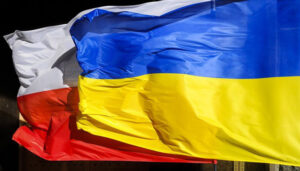
Poland’s Deputy Minister of the Interior, Maciej Duszkiewicz, highlighted the contribution of Ukrainians to the functioning of the Polish economy. He made this statement during an appearance on Polsat News.
Polsat News reports that Duszczyk believes that in many cases, the absence of Ukrainians is noticeable. “If it weren’t for Ukrainian citizens, we’d be waiting 10 minutes for the bus instead of five. After all, they fill the gaps in the Polish labor market. That’s why a certain part of the Polish economy depends on refugees from Ukraine. Generally speaking, these are Ukrainians living in Poland, and we need to reiterate this more and more often, because if a situation were to arise where one day all Ukrainians united and refused to go to work, the Polish economy would grind to a halt,” he said.
He also criticized the Law and Justice (PiS) party’s proposal to deport unemployed men of draft age from Ukraine. In this context, the figure of 3,000 people has been mentioned in public discussions. “Three thousand is a small group. Let me remind you that 900,000 people have been mobilized in Ukraine, so this is no help at all. In fact, those who aren’t working in Poland are either caring for their disabled children or are people who were wounded on the front lines and are undergoing rehabilitation in Poland,” he said.
When asked whether refugees will begin returning to Ukraine once the war ends, Dushchyk replied that “this is a process we’ve observed in other countries, and it’s very easy to predict.”
“Sometimes, those who say, ‘I’m staying,’ end up leaving because something happens. And those who say, ‘I’ll leave as soon as the war ends,’ end up staying. Of course, these trends change with each passing month, as the roots they put down in the host society—in this case, Polish society—grow deeper and deeper. “If someone has enrolled their children in school, they’re learning Polish; if a person is working in the labor market, the likelihood that they’ll return to Ukraine without a strong incentive to do so is practically very low,” he noted.



